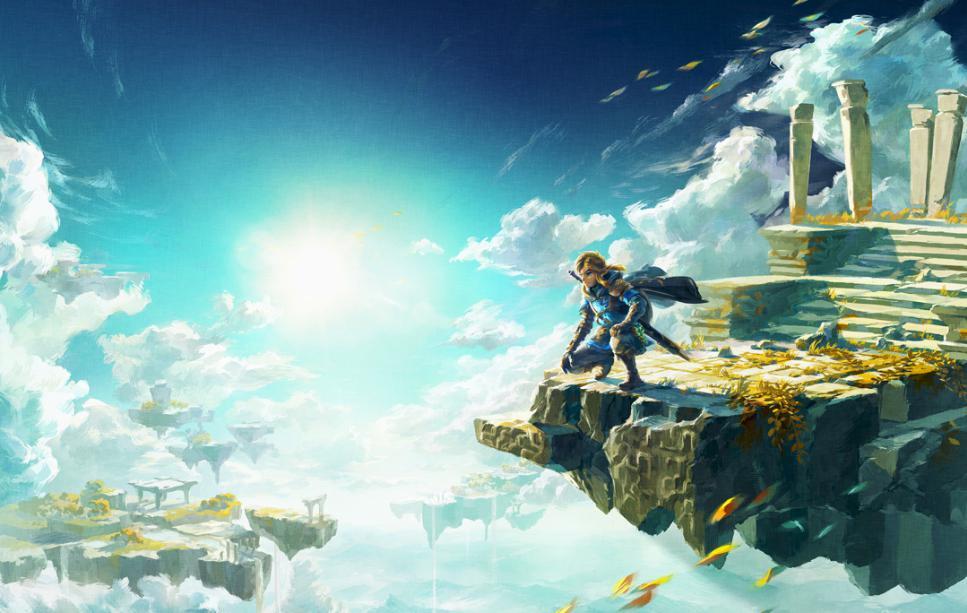
The Legend of Zelda: Tears of the Kingdom
LumiScore
Utveckling
61/100
Utvecklingsvärde
- Problemlösning
- Rumsuppfattning
- Kreativitet
Risk
LÅG
Engagemangsmönster
Minimal press att spendera eller spela överdrivet.
Obs
Föräldratips
Encourage your child to describe their creative solutions to puzzles and challenges. Discuss the choices Link makes in the story and the impact of those choices.
Viktiga färdigheter som barnet utvecklar
Utvecklingsområden
Representation?Hur varierande karaktärerna i spelet är gällande kön och etnicitet. Högre = mer autentisk representation. Endast visning – påverkar inte tidsrekommendationen.
Bechdel-testet?Bechdel-testet kontrollerar om spelet har minst två namngivna kvinnliga karaktärer som pratar med varandra om något annat än en man. Ett enkelt mått på representation.— Klarar testet
Multiple female characters with dialogue who discuss topics other than men.
Föräldratips
Engaging in discussions about in-game problem-solving and ethical dilemmas can further enhance critical thinking and real-world ethical reasoning skills. Sharing experiences can also strengthen family bonds.
Vad ditt barn utvecklar
The Legend of Zelda: Tears of the Kingdom offers extensive opportunities for problem-solving, spatial awareness, strategic thinking, and creativity through its open-world design and unique building mechanics. Players are encouraged to experiment and learn from their environment, fostering adaptive challenge and critical thinking. The game also subtly promotes empathy and ethical reasoning through its narrative and character interactions.
⚖️Hur betyget har diskuterats och granskatsVisa utskrift
Två AI-modeller debatterade poängen i 2 rundor: en Förespråkare som argumenterade för de högst möjliga poängen, och en Kritiker som argumenterade för de lägsta. Slutpoängen är ett medelvärde av deras positioner i runda 2.
=== Round 1 ===

ADVOCATE (arguing HIGH):
B1: problemSolving=5, spatialAwareness=5, strategicThinking=5, criticalThinking=5, memoryAttention=4, creativity=5, readingLanguage=4, mathSystems=2, learningTransfer=5, adaptiveChallenge=5
B2: teamwork=0, communication=0, empathy=2, emotionalRegulation=2, ethicalReasoning=2, positiveSocial=1
B3: handEyeCoord=4, fineMotor=4, reactionTime=4, physicalActivity=0
R1: variableRewards=1, streakMechanics=0, lossAversion=1, fomoEvents=0, stoppingBarriers=0, notifications=0, nearMiss=1, infinitePlay=1, escalatingCommitment=0, variableRewardFreq=1
R2: spendingCeiling=0, payToWin=0, currencyObfuscation=0, spendingPrompts=0, childTargeting=0, adPressure=0, subscriptionPressure=0, socialSpending=0
R3: socialObligation=0, competitiveToxicity=0, strangerRisk=0, socialComparison=0, identitySelfWorth=0, privacyRisk=0
Reasoning: The Legend of Zelda: Tears of the Kingdom excels in cognitive development, earning top scores in problem-solving, creativity, and strategic thinking. The innovative Ultrahand and Fuse mechanics empower players to devise highly imaginative solutions to complex environmental puzzles and combat challenges, directly fostering critical thinking and learning transfer. This open-ended design necessitates constant adaptation and strategic planning, providing a rich, adaptive challenge that significantly boosts cognitive benefits for child development.

CRITIC (arguing LOW):
B1: problemSolving=5, spatialAwareness=5, strategicThinking=5, criticalThinking=4, memoryAttention=4, creativity=5, readingLanguage=3, mathSystems=1, learningTransfer=5, adaptiveChallenge=4
B2: teamwork=0, communication=0, empathy=1, emotionalRegulation=1, ethicalReasoning=1, positiveSocial=1
B3: handEyeCoord=4, fineMotor=4, reactionTime=3, physicalActivity=0
R1: variableRewards=1, streakMechanics=0, lossAversion=1, fomoEvents=0, stoppingBarriers=1, notifications=0, nearMiss=1, infinitePlay=2, escalatingCommitment=1, variableRewardFreq=1
R2: spendingCeiling=0, payToWin=0, currencyObfuscation=0, spendingPrompts=0, childTargeting=0, adPressure=0, subscriptionPressure=0, socialSpending=0
R3: socialObligation=0, competitiveToxicity=0, strangerRisk=0, socialComparison=0, identitySelfWorth=0, privacyRisk=0
Reasoning: The Legend of Zelda: Tears of the Kingdom scores low in B2 (Social) because, as a single-player game, it lacks interactive social mechanics. There is no active teamwork, communication, or direct positive social interaction that would foster significant social-emotional development. Similarly, R2 (Monetization) and R3 (Social Risk) are minimal, scoring zero across the board. The absence of microtransactions, loot boxes, battle passes, and stranger chat eliminates these risks entirely, indicating a game free from predatory financial practices and social pressures.


=== Round 2 ===

ADVOCATE (arguing HIGH):
B1: problemSolving=5, spatialAwareness=5, strategicThinking=5, criticalThinking=5, memoryAttention=5, creativity=5, readingLanguage=4, mathSystems=1, learningTransfer=5, adaptiveChallenge=5
B2: teamwork=0, communication=0, empathy=2, emotionalRegulation=2, ethicalReasoning=2, positiveSocial=1
B3: handEyeCoord=4, fineMotor=4, reactionTime=4, physicalActivity=0
R1: variableRewards=1, streakMechanics=0, lossAversion=1, fomoEvents=0, stoppingBarriers=2, notifications=0, nearMiss=1, infinitePlay=2, escalatingCommitment=1, variableRewardFreq=1
R2: spendingCeiling=0, payToWin=0, currencyObfuscation=0, spendingPrompts=0, childTargeting=0, adPressure=0, subscriptionPressure=0, socialSpending=0
R3: socialObligation=0, competitiveToxicity=0, strangerRisk=0, socialComparison=0, identitySelfWorth=0, privacyRisk=0
Reasoning: The critic significantly undervalues Tears of the Kingdom's robust cognitive and social-emotional benefits. The game’s complex physics, emergent gameplay, and vast world elevate critical thinking, memory, and adaptive challenge to maximum scores, while extensive reading is crucial for understanding its rich lore. Although single-player, the narrative deeply cultivates empathy, emotional regulation, and ethical reasoning through Link’s interactions and heroic quest, challenging the notion of minimal social-emotional impact. The engrossing nature of exploration also warrants a slightly higher stopping barrier score, though overall risks remain commendably low due to the absence of predatory mechanics.

CRITIC (arguing LOW):
B1: problemSolving=5, spatialAwareness=5, strategicThinking=5, criticalThinking=5, memoryAttention=4, creativity=5, readingLanguage=4, mathSystems=2, learningTransfer=5, adaptiveChallenge=5
B2: teamwork=0, communication=0, empathy=0, emotionalRegulation=1, ethicalReasoning=1, positiveSocial=1
B3: handEyeCoord=4, fineMotor=4, reactionTime=4, physicalActivity=0
R1: variableRewards=1, streakMechanics=0, lossAversion=1, fomoEvents=0, stoppingBarriers=0, notifications=0, nearMiss=1, infinitePlay=1, escalatingCommitment=0, variableRewardFreq=2
R2: spendingCeiling=0, payToWin=0, currencyObfuscation=0, spendingPrompts=0, childTargeting=0, adPressure=0, subscriptionPressure=0, socialSpending=0
R3: socialObligation=0, competitiveToxicity=0, strangerRisk=0, socialComparison=0, identitySelfWorth=0, privacyRisk=0
Reasoning: While the robust Ultrahand and Fuse mechanics clearly foster strong cognitive and motor skill development, the advocate's social-emotional (B2) scores are overstated for a single-player experience. Lacking interactive social mechanics, the game cannot actively develop empathy, emotional regulation, or complex ethical reasoning in a meaningful way beyond narrative exposure. Benefits in these areas are thus reduced to zero or minimal. Furthermore, the extensive open-world exploration inherently involves a slightly higher degree of variable reward frequency as players unpredictably discover secrets and resources.

=== Final (weighted 40% advocate / 60% critic, Round 2) ===
B1: problemSolving=5, spatialAwareness=5, strategicThinking=5, criticalThinking=5, memoryAttention=4, creativity=5, readingLanguage=4, mathSystems=2, learningTransfer=5, adaptiveChallenge=5
B2: teamwork=0, communication=0, empathy=1, emotionalRegulation=1, ethicalReasoning=1, positiveSocial=1
B3: handEyeCoord=4, fineMotor=4, reactionTime=4, physicalActivity=0
R1: variableRewards=1, streakMechanics=0, lossAversion=1, fomoEvents=0, stoppingBarriers=1, notifications=0, nearMiss=1, infinitePlay=1, escalatingCommitment=0, variableRewardFreq=2
R2: spendingCeiling=0, payToWin=0, currencyObfuscation=0, spendingPrompts=0, childTargeting=0, adPressure=0, subscriptionPressure=0, socialSpending=0
R3: socialObligation=0, competitiveToxicity=0, strangerRisk=0, socialComparison=0, identitySelfWorth=0, privacyRisk=0
Curascore: 73  BDS: 0.610  RIS: 0.105
Regelefterlevnad
Klicka på en symbol för detaljer. Grå = ej utvärderad än.
Om spelet
An epic adventure across the land and skies of Hyrule awaits in The Legend of Zelda™: Tears of the Kingdom for Nintendo Switch™. The adventure is yours to create in a world fueled by your imagination.