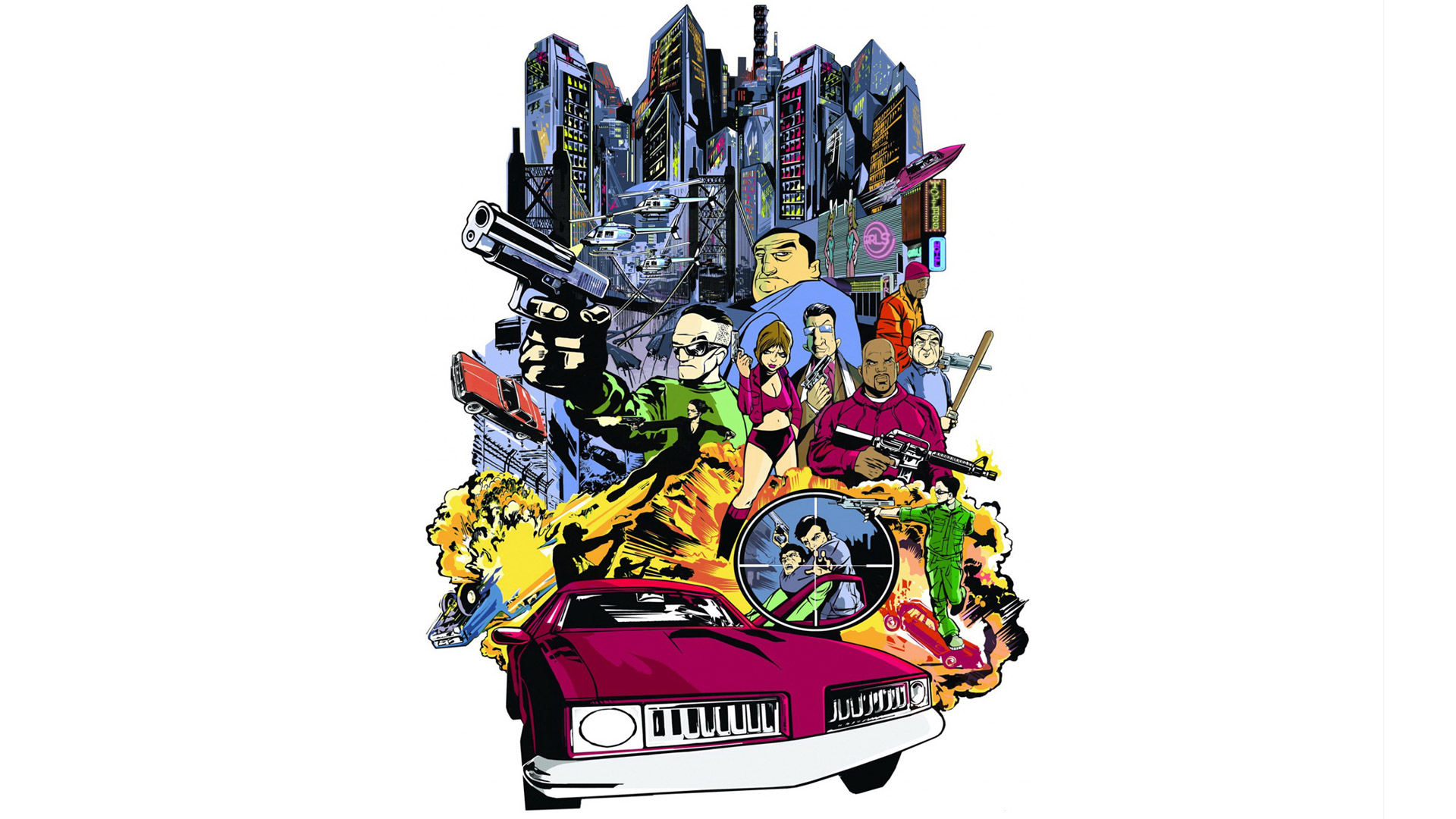
Grand Theft Auto III
LumiScore?Our 0–100 score for how developmentally beneficial and low-risk this game is for children. Higher is better.
Utveckling
50/100
Utvecklingsvärde
- Rumsuppfattning
- Hand-öga-koordination
- Finmotorik
Risk
LÅG
Engagemangsmönster
Minimal press att spendera eller spela överdrivet.
Obs
Föräldratips
Föräldrar bör vara medvetna om spelets M-klassificering på grund av dess explicita innehål. Överväg att spela tillsammans eller sätt strikta tidsgränser för att hantera exponering för våldsamt och mogent innehål, och diskutera spelets berättelse och karaktärsval med ditt barn.
Viktiga färdigheter som barnet utvecklar
Utvecklingsområden
Representation?Hur varierande karaktärerna i spelet är gällande kön och etnicitet. Högre = mer autentisk representation. Endast visning – påverkar inte tidsrekommendationen.
Bechdel-testet?Bechdel-testet kontrollerar om spelet har minst två namngivna kvinnliga karaktärer som pratar med varandra om något annat än en man. Ett enkelt mått på representation.— Klarar inte testet
Även om Grand Theft Auto III innehåller flera namngivna kvinnliga karaktärer som Maria Latore och Asuka Kasen, är deras interaktioner, såsom Asukas skydd av Maria, nästan uteslutande drivna av eller centrerade omkring manliga karaktärer (t.ex. Salvatore, Claude) eller de mansdominerade gangkonflikterna, vilket misslyckas med det tredje kriteriet.
Vad ditt barn utvecklar
Grand Theft Auto III erbjuder en open-world-upplevelse som utmanar spelare med rumslig medvetenhet, hand-öga-koordination och reaktionstid genom sina köp- och stridsmekanik. Spelare utvecklar problemlösningsförmåga genom att slutföra olika uppdragsmål och navigera i den komplexa stadsmiljön, medan de adaptiva utmaningarna säkerställer en kontinuerlig inlärningskurva.
⚖️Hur betyget har diskuterats och granskatsVisa utskrift
Två AI-modeller debatterade poängen i 2 rundor: en Förespråkare som argumenterade för de högst möjliga poängen, och en Kritiker som argumenterade för de lägsta. Slutpoängen är ett medelvärde av deras positioner i runda 2.
=== Round 1 ===

ADVOCATE (arguing HIGH):
B1: problemSolving=5, spatialAwareness=5, strategicThinking=5, criticalThinking=5, memoryAttention=4, creativity=4, readingLanguage=3, mathSystems=1, learningTransfer=4, adaptiveChallenge=4
B2: teamwork=0, communication=0, empathy=1, emotionalRegulation=2, ethicalReasoning=2, positiveSocial=1
B3: handEyeCoord=5, fineMotor=4, reactionTime=5, physicalActivity=0
R1: variableRewards=2, streakMechanics=0, lossAversion=2, fomoEvents=0, stoppingBarriers=1, notifications=0, nearMiss=2, infinitePlay=3, escalatingCommitment=2, variableRewardFreq=2
R2: spendingCeiling=0, payToWin=0, currencyObfuscation=0, spendingPrompts=0, childTargeting=0, adPressure=0, subscriptionPressure=0, socialSpending=0
R3: socialObligation=0, competitiveToxicity=0, strangerRisk=0, socialComparison=0, identitySelfWorth=1, privacyRisk=0
Reasoning: Grand Theft Auto III, a pioneering open-world action game, offers substantial cognitive and motor benefits through its demanding gameplay. The intricate urban environment and multi-faceted missions compel players to engage in high-level problem-solving, strategic thinking, spatial awareness, and critical thinking to succeed. Furthermore, the intense vehicle pursuits and combat scenarios significantly develop hand-eye coordination, fine motor skills, and reaction times. Crucially, as a single-player experience with no microtransactions, loot boxes, or online social components, GTA III presents exceptionally low financial and social risks, while its engagement mechanics are moderate compared to modern addictive titles. These factors underscore its value in fostering core developmental skills within a contained, player-driven narrative.

CRITIC (arguing LOW):
B1: problemSolving=3, spatialAwareness=4, strategicThinking=3, criticalThinking=2, memoryAttention=3, creativity=1, readingLanguage=2, mathSystems=0, learningTransfer=2, adaptiveChallenge=3
B2: teamwork=0, communication=0, empathy=1, emotionalRegulation=0, ethicalReasoning=0, positiveSocial=0
B3: handEyeCoord=4, fineMotor=3, reactionTime=4, physicalActivity=0
R1: variableRewards=2, streakMechanics=1, lossAversion=2, fomoEvents=0, stoppingBarriers=2, notifications=1, nearMiss=2, infinitePlay=2, escalatingCommitment=2, variableRewardFreq=2
R2: spendingCeiling=0, payToWin=0, currencyObfuscation=0, spendingPrompts=0, childTargeting=0, adPressure=0, subscriptionPressure=0, socialSpending=0
R3: socialObligation=0, competitiveToxicity=0, strangerRisk=0, socialComparison=0, identitySelfWorth=0, privacyRisk=0
Reasoning: Grand Theft Auto III is a strictly single-player experience, leading to zero scores for teamwork, communication, and positive social interaction. The game's narrative and mechanics, centered on criminal activities and revenge, offer no active development of empathy, emotional regulation, or ethical reasoning. While its open-world design and mission structure incorporate variable rewards and escalating commitment, justifying higher R1 scores, the absence of multiplayer, microtransactions, or social online features results in a clean slate of zero for all R2 and R3 risks.


=== Round 2 ===

ADVOCATE (arguing HIGH):
B1: problemSolving=4, spatialAwareness=5, strategicThinking=4, criticalThinking=4, memoryAttention=4, creativity=2, readingLanguage=2, mathSystems=0, learningTransfer=3, adaptiveChallenge=4
B2: teamwork=0, communication=0, empathy=2, emotionalRegulation=2, ethicalReasoning=1, positiveSocial=0
B3: handEyeCoord=5, fineMotor=4, reactionTime=5, physicalActivity=0
R1: variableRewards=2, streakMechanics=1, lossAversion=2, fomoEvents=0, stoppingBarriers=2, notifications=1, nearMiss=2, infinitePlay=2, escalatingCommitment=2, variableRewardFreq=2
R2: spendingCeiling=0, payToWin=0, currencyObfuscation=0, spendingPrompts=0, childTargeting=0, adPressure=0, subscriptionPressure=0, socialSpending=0
R3: socialObligation=0, competitiveToxicity=0, strangerRisk=0, socialComparison=0, identitySelfWorth=0, privacyRisk=0
Reasoning: Grand Theft Auto III, while single-player, demands significant cognitive and motor skill engagement. Players consistently utilize problem-solving, strategic thinking, and adaptive challenge in mission planning and execution, alongside acute spatial awareness for navigating Liberty City. The intense driving and combat scenarios critically enhance hand-eye coordination and reaction time. Furthermore, exposure to the game's narrative can subtly foster emotional regulation and narrative empathy by engaging with complex character motivations and consequences, pushing social-emotional benefits beyond a mere zero.

CRITIC (arguing LOW):
B1: problemSolving=4, spatialAwareness=5, strategicThinking=4, criticalThinking=3, memoryAttention=4, creativity=2, readingLanguage=3, mathSystems=1, learningTransfer=3, adaptiveChallenge=4
B2: teamwork=0, communication=0, empathy=0, emotionalRegulation=0, ethicalReasoning=0, positiveSocial=1
B3: handEyeCoord=5, fineMotor=4, reactionTime=5, physicalActivity=0
R1: variableRewards=3, streakMechanics=0, lossAversion=2, fomoEvents=0, stoppingBarriers=2, notifications=0, nearMiss=2, infinitePlay=3, escalatingCommitment=2, variableRewardFreq=2
R2: spendingCeiling=0, payToWin=0, currencyObfuscation=0, spendingPrompts=0, childTargeting=0, adPressure=0, subscriptionPressure=0, socialSpending=0
R3: socialObligation=0, competitiveToxicity=0, strangerRisk=0, socialComparison=0, identitySelfWorth=1, privacyRisk=0
Reasoning: While GTA III offers engaging open-world exploration and action, the advocate overstates its cognitive benefits; 'high-level' critical thinking and creativity are not actively developed by following mission objectives, even in an open environment. Crucially, as a single-player game, its social-emotional benefits are minimal, with narrative empathy not equating to interactive social development, and the criminal context offering little for ethical reasoning. Motor benefits are accurately high given the action gameplay. Risks for R1 are slightly understated due to common engagement patterns inherent to open-world design, but R2 and R3 remain appropriately low given the absence of microtransactions or multiplayer features.

=== Final (weighted 40% advocate / 60% critic, Round 2) ===
B1: problemSolving=4, spatialAwareness=5, strategicThinking=4, criticalThinking=3, memoryAttention=4, creativity=2, readingLanguage=3, mathSystems=1, learningTransfer=3, adaptiveChallenge=4
B2: teamwork=0, communication=0, empathy=1, emotionalRegulation=1, ethicalReasoning=0, positiveSocial=1
B3: handEyeCoord=5, fineMotor=4, reactionTime=5, physicalActivity=0
R1: variableRewards=3, streakMechanics=0, lossAversion=2, fomoEvents=0, stoppingBarriers=2, notifications=0, nearMiss=2, infinitePlay=3, escalatingCommitment=2, variableRewardFreq=2
R2: spendingCeiling=0, payToWin=0, currencyObfuscation=0, spendingPrompts=0, childTargeting=0, adPressure=0, subscriptionPressure=0, socialSpending=0
R3: socialObligation=0, competitiveToxicity=0, strangerRisk=0, socialComparison=0, identitySelfWorth=1, privacyRisk=0
Curascore: 60  BDS: 0.500  RIS: 0.254
Regelefterlevnad
Klicka på en symbol för detaljer. Grå = ej utvärderad än.
Om spelet
Grand Theft Auto III is an open-world action game, a part of the criminal franchise GTA. As the first in the series 3D game with high-quality textures, GTA III became exemplary in its genre.