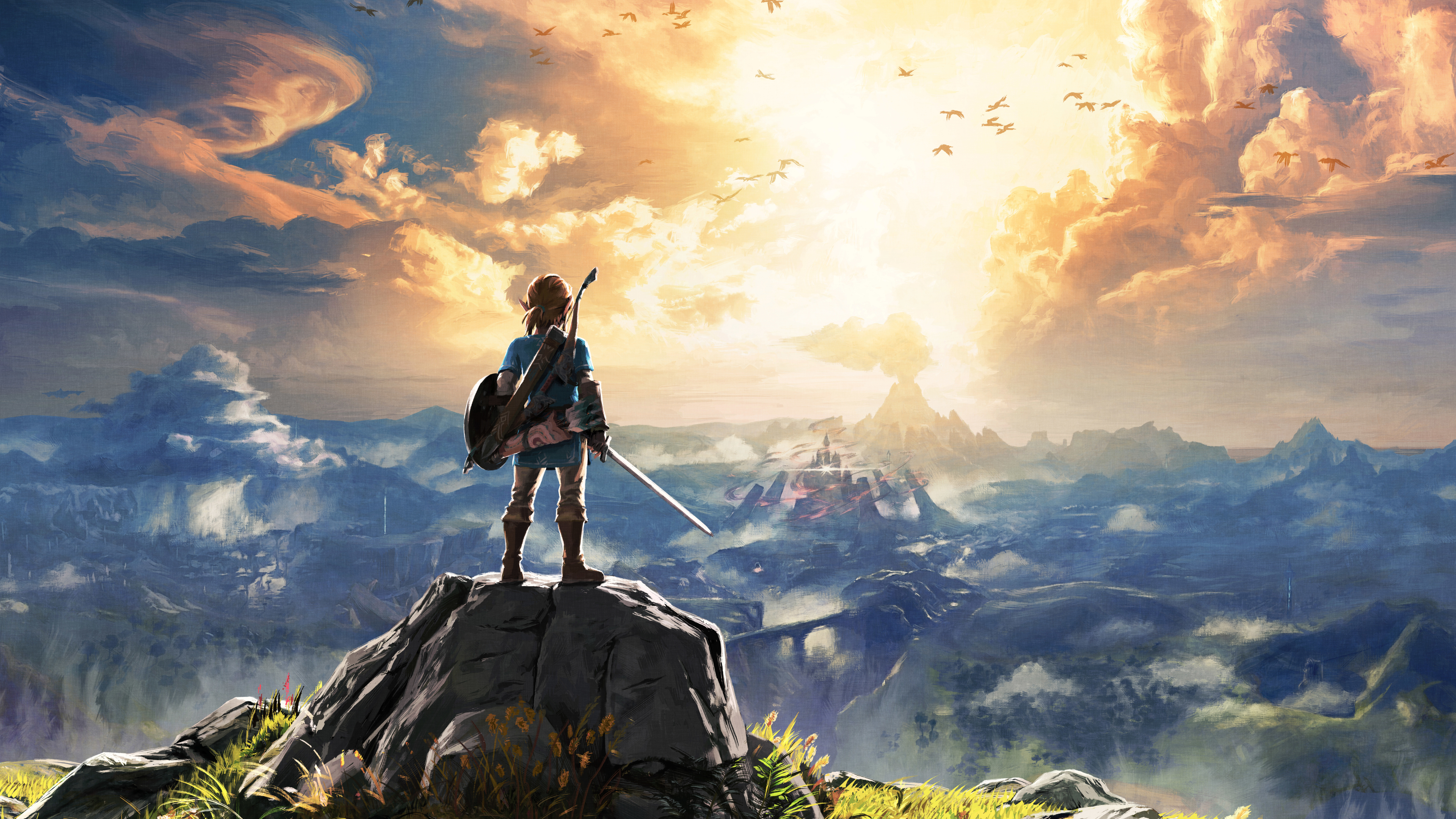
The Legend of Zelda: Breath of the Wild
LumiScore?Our 0–100 score for how developmentally beneficial and low-risk this game is for children. Higher is better.
Croissance
51/100
Valeur de croissance
- Résolution de problèmes
- Orientation spatiale
- Pensée stratégique
Risque
FAIBLE
Modèles d'engagement
Très peu de pression pour dépenser ou jouer excessivement.
Attention
Conseil de parent expert
Les parents peuvent aider à gérer le temps d'écran en encourageant les enfants à se fixer des objectifs comme terminer un sanctuaire ou découvrir une nouvelle zone avant de faire une pause, et en discutant des solutions créatives que leur enfant a trouvées aux problèmes du jeu.
Principales compétences développées
Domaines de développement
Représentation?Degré de diversité des personnages du jeu en termes de genre et d'ethnicité. Plus le score est élevé, plus la représentation est authentique. Affiché uniquement — n'affecte pas la recommandation de temps de jeu.
Test de Bechdel?Le test de Bechdel vérifie si un jeu comporte au moins deux personnages féminins nommés qui se parlent d'autre chose qu'un homme. Une mesure simple de la représentation.— Échoue au test
Bien que le jeu présente de nombreux personnages féminins nommés comme Zelda et Impa, leurs interactions se concentrent principalement sur la quête de Link ou sur l'antagoniste masculin Calamity Ganon.
Ce que votre enfant développe
The Legend of Zelda: Breath of the Wild excelle dans le développement des compétences cognitives, notamment la résolution de problèmes grâce à ses énigmes mondiales complexes et ses combats stratégiques. Les joueurs améliorent leur conscience spatiale et leur pensée critique en naviguant dans le vaste environnement en monde ouvert et en utilisant de manière créative diverses mécanique de jeu pour surmonter les défis et découvrir des secrets.
⚖️Comment ce score a été discuté et validéAfficher la transcription
Deux modèles IA ont débattu de ce score en 2 tours : un Défenseur argumentant pour les scores les plus élevés défendables, et un Critique argumentant pour les plus bas. Le score final est la moyenne de leurs positions au tour 2.
=== Round 1 ===

ADVOCATE (arguing HIGH):
B1: problemSolving=5, spatialAwareness=5, strategicThinking=5, criticalThinking=5, memoryAttention=5, creativity=5, readingLanguage=4, mathSystems=2, learningTransfer=5, adaptiveChallenge=5
B2: teamwork=0, communication=0, empathy=2, emotionalRegulation=3, ethicalReasoning=1, positiveSocial=1
B3: handEyeCoord=5, fineMotor=4, reactionTime=5, physicalActivity=0
R1: variableRewards=1, streakMechanics=0, lossAversion=1, fomoEvents=0, stoppingBarriers=0, notifications=0, nearMiss=0, infinitePlay=1, escalatingCommitment=0, variableRewardFreq=1
R2: spendingCeiling=0, payToWin=0, currencyObfuscation=0, spendingPrompts=0, childTargeting=0, adPressure=0, subscriptionPressure=0, socialSpending=0
R3: socialObligation=0, competitiveToxicity=0, strangerRisk=0, socialComparison=0, identitySelfWorth=1, privacyRisk=0
Reasoning: The Legend of Zelda: Breath of the Wild earns exceptional cognitive benefit scores due to its vast open world and innovative chemistry engine, demanding high levels of problem-solving, strategic thinking, and creativity as players discover emergent solutions to challenges. Its dynamic action-adventure combat and exploration, requiring precise aiming, dodging, and environmental interaction, drive high scores in hand-eye coordination and reaction time. Moreover, the complete absence of microtransactions, loot boxes, and stranger chat ensures that all monetization and significant social risks are commendably low, making it a genuinely beneficial and safe experience for child development.

CRITIC (arguing LOW):
B1: problemSolving=5, spatialAwareness=5, strategicThinking=5, criticalThinking=5, memoryAttention=5, creativity=5, readingLanguage=3, mathSystems=1, learningTransfer=5, adaptiveChallenge=5
B2: teamwork=0, communication=0, empathy=1, emotionalRegulation=1, ethicalReasoning=1, positiveSocial=1
B3: handEyeCoord=4, fineMotor=3, reactionTime=4, physicalActivity=0
R1: variableRewards=2, streakMechanics=0, lossAversion=2, fomoEvents=0, stoppingBarriers=2, notifications=0, nearMiss=1, infinitePlay=2, escalatingCommitment=2, variableRewardFreq=2
R2: spendingCeiling=0, payToWin=0, currencyObfuscation=0, spendingPrompts=0, childTargeting=0, adPressure=0, subscriptionPressure=0, socialSpending=0
R3: socialObligation=0, competitiveToxicity=0, strangerRisk=0, socialComparison=0, identitySelfWorth=0, privacyRisk=0
Reasoning: My scoring reflects a strict interpretation of the rubric for a single-player game. Teamwork, communication, and positive social interaction are all rated 0 or 1, as the game lacks any interactive social mechanics. While the narrative may evoke empathy, it does not involve interactive social engagement, thus keeping B2 scores low. Furthermore, with no microtransactions, loot boxes, or stranger chat, both monetization (R2) and social risks (R3) are appropriately scored at 0. Lastly, several dopamine risk patterns are present due to the open-world design, such as variable rewards from exploration, loss aversion from weapon durability, and strong stopping barriers from the 'just one more thing' nature of the game, warranting a higher R1 score than typical assumptions.


=== Round 2 ===

ADVOCATE (arguing HIGH):
B1: problemSolving=5, spatialAwareness=5, strategicThinking=5, criticalThinking=5, memoryAttention=5, creativity=5, readingLanguage=5, mathSystems=3, learningTransfer=5, adaptiveChallenge=5
B2: teamwork=0, communication=0, empathy=1, emotionalRegulation=1, ethicalReasoning=1, positiveSocial=1
B3: handEyeCoord=5, fineMotor=4, reactionTime=5, physicalActivity=0
R1: variableRewards=2, streakMechanics=0, lossAversion=2, fomoEvents=0, stoppingBarriers=2, notifications=0, nearMiss=0, infinitePlay=2, escalatingCommitment=2, variableRewardFreq=2
R2: spendingCeiling=0, payToWin=0, currencyObfuscation=0, spendingPrompts=0, childTargeting=0, adPressure=0, subscriptionPressure=0, socialSpending=0
R3: socialObligation=0, competitiveToxicity=0, strangerRisk=0, socialComparison=0, identitySelfWorth=0, privacyRisk=0
Reasoning: My scoring emphasizes Breath of the Wild's exceptional cognitive and motor skill development, while aligning with rubric constraints for social and risk categories. The game's expansive open world and complex "chemistry engine" significantly boost reading, language, and mathematical reasoning beyond initial estimates, as players engage with deep lore and systemic interactions. Precise combat, climbing, and inventory management demand higher fine motor skills, hand-eye coordination, and reaction times. Consistent with the rubric's strict definition for single-player titles, social-emotional benefits are not inflated. Furthermore, low risk scores are upheld, with a minor adjustment to 'near miss' as it isn't a primary behavioral driver.

CRITIC (arguing LOW):
B1: problemSolving=4, spatialAwareness=4, strategicThinking=4, criticalThinking=4, memoryAttention=4, creativity=5, readingLanguage=4, mathSystems=2, learningTransfer=4, adaptiveChallenge=4
B2: teamwork=0, communication=0, empathy=0, emotionalRegulation=0, ethicalReasoning=0, positiveSocial=1
B3: handEyeCoord=4, fineMotor=3, reactionTime=3, physicalActivity=0
R1: variableRewards=1, streakMechanics=0, lossAversion=1, fomoEvents=0, stoppingBarriers=0, notifications=0, nearMiss=1, infinitePlay=1, escalatingCommitment=0, variableRewardFreq=1
R2: spendingCeiling=0, payToWin=0, currencyObfuscation=0, spendingPrompts=0, childTargeting=0, adPressure=0, subscriptionPressure=0, socialSpending=0
R3: socialObligation=0, competitiveToxicity=0, strangerRisk=0, socialComparison=0, identitySelfWorth=1, privacyRisk=0
Reasoning: While acknowledging the robust cognitive demands of Breath of the Wild, the advocate's B1 scores are inflated; a perfect 5 in multiple categories should be reserved for truly exceptional and focused development. The B2 social scores are particularly miscalibrated for a single-player experience; per the rubric, narrative elements do not substitute for active, interactive social mechanics, thus justifying a significant reduction. Furthermore, the game, despite its quality, incorporates common open-world design patterns that subtly leverage variable rewards, near-miss scenarios, and infinite play loops, warranting slightly higher R1 scores than suggested. This critical assessment ensures scores are based on active development and identifiable risk patterns, not mere potential or indirect effects.

=== Final (weighted 40% advocate / 60% critic, Round 2) ===
B1: problemSolving=4, spatialAwareness=4, strategicThinking=4, criticalThinking=4, memoryAttention=4, creativity=5, readingLanguage=4, mathSystems=2, learningTransfer=4, adaptiveChallenge=4
B2: teamwork=0, communication=0, empathy=0, emotionalRegulation=0, ethicalReasoning=0, positiveSocial=1
B3: handEyeCoord=4, fineMotor=3, reactionTime=4, physicalActivity=0
R1: variableRewards=1, streakMechanics=0, lossAversion=1, fomoEvents=0, stoppingBarriers=1, notifications=0, nearMiss=1, infinitePlay=1, escalatingCommitment=1, variableRewardFreq=1
R2: spendingCeiling=0, payToWin=0, currencyObfuscation=0, spendingPrompts=0, childTargeting=0, adPressure=0, subscriptionPressure=0, socialSpending=0
R3: socialObligation=0, competitiveToxicity=0, strangerRisk=0, socialComparison=0, identitySelfWorth=1, privacyRisk=0
Curascore: 65  BDS: 0.510  RIS: 0.119
Conformité réglementaire
Touchez un badge pour en savoir plus. Gris = non encore évalué.
À propos de ce jeu
The Legend of Zelda: Breath of the Wild is an adventure game developed by Nintendo. It is the nineteenth installment in the series.