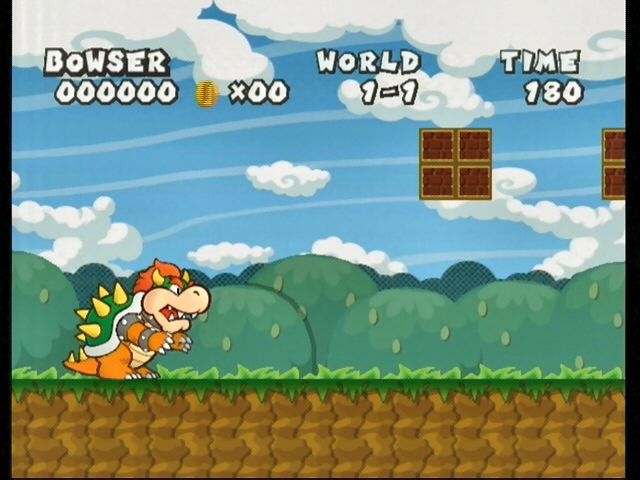
Paper Mario: The Thousand-Year Door
LumiScore?Our 0–100 score for how developmentally beneficial and low-risk this game is for children. Higher is better.
Crecimiento
57/100
Valor de Crecimiento
- Lectura y Lenguaje
- Resolución de Problemas
- Pensamiento Estratégico
Riesgo
BAJO
Patrones de Interacción
Presión mínima para gastar o jugar en exceso.
Atención
Consejo experto para padres
When your child sits down to play, agree on a chapter checkpoint or save block as a stopping point before they start. The game's frequent save prompts make this easy — you can simply say 'save at the next inn and we'll pick it up tomorrow.'
Principales habilidades desarrolladas
Áreas de desarrollo
Representación?¿Qué tan diversos son los personajes del juego en cuanto a género y etnia? Mayor = representación más auténtica. Solo se muestra — no afecta la recomendación de tiempo.
Test de Bechdel?El test de Bechdel comprueba si un juego tiene al menos dos personajes femeninos con nombre que hablan entre sí sobre algo que no sea un hombre. Una medida sencilla de representación.— No supera el test
While Princess Peach is a major character with her own playable chapters, her storyline primarily revolves around being rescued by Mario, and named female characters rarely interact with each other about topics other than Mario.
Consejo experto para padres
Try asking your child to explain their battle strategy to you — 'Why did you use that move?' or 'What's that enemy's weakness?' This turns the game's strategic layer into an out-loud reasoning exercise and gives you a natural window into what they're learning.
Lo que tu hijo/a desarrolla
Paper Mario: The Thousand-Year Door is a richly rewarding RPG that delivers strong cognitive benefits for children. The game's dense dialogue and story-driven structure make reading comprehension a core skill, while its turn-based battle system demands strategic planning, critical thinking, and resource management. Players must analyze enemy weaknesses, manage timing-based action commands (building reaction time and hand-eye coordination), and solve environmental puzzles throughout each chapter. The layered narrative — told across three simultaneous storylines — exercises memory, attention, and the ability to track complex cause-and-effect relationships. The game's charm, humor, and genuine character writing also foster emotional engagement and a mild sense of empathy for its diverse cast of NPCs.
Cumplimiento normativo
Toca una insignia para ver detalles. Gris = aún no evaluado.
Sobre este juego
Paper Mario: The Thousand-Year Door is a role-playing video game developed by Intelligent Systems and published by Nintendo for the GameCube. The Thousand-Year Door is the second Paper Mario game.