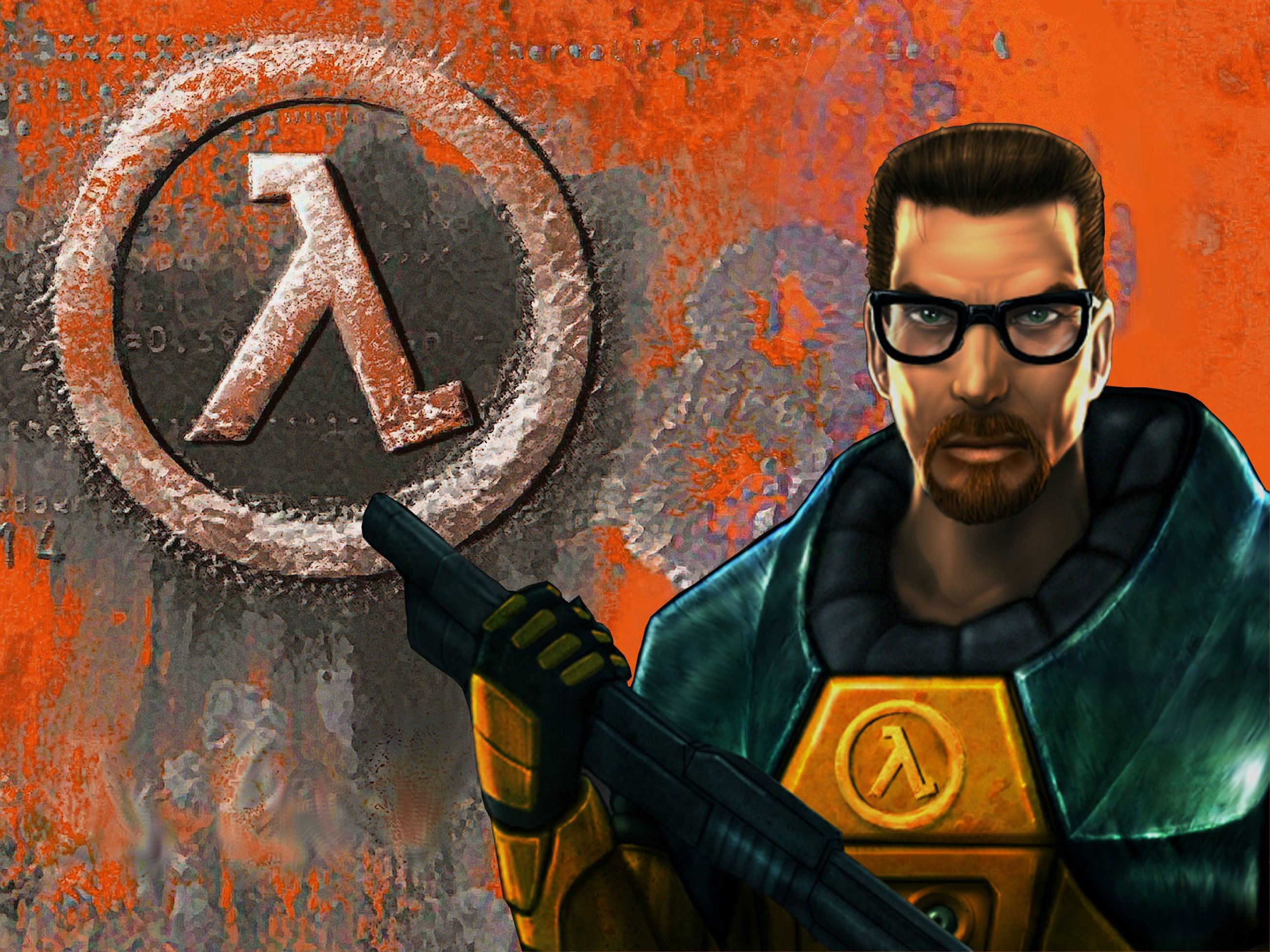
Half-Life
LumiScore?Our 0–100 score for how developmentally beneficial and low-risk this game is for children. Higher is better.
Crecimiento
42/100
Valor de Crecimiento
- Conciencia Espacial
- Coordinación Ojo-Mano
- Tiempo de Reacción
Riesgo
BAJO
Patrones de Interacción
Presión mínima para gastar o jugar en exceso.
Atención
Consejo experto para padres
Los padres deben estar conscientes de la clasificación M del juego debido a la violencia y contenido temático. Discutan hábitos de juego responsable, incluyendo guardar progreso y tomar descansos, para manejar la frustración potencial durante secciones desafiantes.
Principales habilidades desarrolladas
Áreas de desarrollo
Representación?¿Qué tan diversos son los personajes del juego en cuanto a género y etnia? Mayor = representación más auténtica. Solo se muestra — no afecta la recomendación de tiempo.
Test de Bechdel?El test de Bechdel comprueba si un juego tiene al menos dos personajes femeninos con nombre que hablan entre sí sobre algo que no sea un hombre. Una medida sencilla de representación.— No supera el test
Half-Life carece de al menos dos personajes femeninos nombrados, por lo tanto no cumple el primer criterio de la prueba de Bechdel.
Lo que tu hijo/a desarrolla
El juego desarrolla conciencia espacial, pensamiento estratégico y coordinación mano-ojo a través del combate desafiante y la navegación ambiental. Los jugadores aprenden a adaptarse a nuevos enemigos y mecánicas de armas, fomentando habilidades de resolución de problemas en situaciones de alta presión.
⚖️Cómo se debatió esta puntuaciónMostrar transcripción
Dos modelos de IA debatieron esta puntuación en 2 rondas: un Defensor argumentando a favor de las puntuaciones más altas posibles, y un Crítico argumentando a favor de las más bajas. La puntuación final es el promedio de sus posiciones en la ronda 2.
=== Round 1 ===

ADVOCATE (arguing HIGH):
B1: problemSolving=5, spatialAwareness=5, strategicThinking=5, criticalThinking=5, memoryAttention=4, creativity=3, readingLanguage=2, mathSystems=0, learningTransfer=5, adaptiveChallenge=5
B2: teamwork=0, communication=0, empathy=2, emotionalRegulation=1, ethicalReasoning=1, positiveSocial=0
B3: handEyeCoord=5, fineMotor=5, reactionTime=5, physicalActivity=0
R1: variableRewards=1, streakMechanics=0, lossAversion=1, fomoEvents=0, stoppingBarriers=0, notifications=0, nearMiss=0, infinitePlay=0, escalatingCommitment=0, variableRewardFreq=0
R2: spendingCeiling=0, payToWin=0, currencyObfuscation=0, spendingPrompts=0, childTargeting=0, adPressure=0, subscriptionPressure=0, socialSpending=0
R3: socialObligation=0, competitiveToxicity=0, strangerRisk=0, socialComparison=0, identitySelfWorth=1, privacyRisk=0
Reasoning: Half-Life excels in cognitive benefits, demanding high problem-solving, spatial awareness, and strategic thinking due to its complex level design, diverse enemy encounters, and continuous adaptation to new gameplay mechanics. The game also fosters strong motor skills, requiring precise hand-eye coordination, fine motor control for aiming, and rapid reaction times in its intense combat sequences. Furthermore, the game poses minimal risks in monetization and social areas, as it is a single-player experience devoid of microtransactions, loot boxes, or stranger interaction, making any potential social or financial risks negligible.

CRITIC (arguing LOW):
B1: problemSolving=4, spatialAwareness=4, strategicThinking=3, criticalThinking=3, memoryAttention=3, creativity=1, readingLanguage=2, mathSystems=0, learningTransfer=3, adaptiveChallenge=4
B2: teamwork=0, communication=0, empathy=1, emotionalRegulation=1, ethicalReasoning=1, positiveSocial=0
B3: handEyeCoord=5, fineMotor=4, reactionTime=4, physicalActivity=0
R1: variableRewards=1, streakMechanics=0, lossAversion=1, fomoEvents=0, stoppingBarriers=0, notifications=0, nearMiss=1, infinitePlay=0, escalatingCommitment=1, variableRewardFreq=1
R2: spendingCeiling=0, payToWin=0, currencyObfuscation=0, spendingPrompts=0, childTargeting=0, adPressure=0, subscriptionPressure=0, socialSpending=0
R3: socialObligation=0, competitiveToxicity=0, strangerRisk=0, socialComparison=0, identitySelfWorth=0, privacyRisk=0
Reasoning: Half-Life, as a single-player experience without any online or co-operative elements, inherently receives minimal scores in all social-emotional (B2) and social risk (R3) categories. Teamwork, communication, and positive social interaction are completely absent due to the lack of interactive social mechanics. While the narrative may evoke some empathy or require basic emotional regulation during tense moments, these are not active developmental practices rooted in interactive social experiences as demanded by the rubric. Similarly, the absence of microtransactions, loot boxes, and stranger chat eliminates all monetization (R2) and social risks (R3).


=== Round 2 ===

ADVOCATE (arguing HIGH):
B1: problemSolving=4, spatialAwareness=4, strategicThinking=3, criticalThinking=3, memoryAttention=3, creativity=2, readingLanguage=2, mathSystems=0, learningTransfer=3, adaptiveChallenge=4
B2: teamwork=0, communication=0, empathy=2, emotionalRegulation=1, ethicalReasoning=1, positiveSocial=0
B3: handEyeCoord=5, fineMotor=5, reactionTime=4, physicalActivity=0
R1: variableRewards=1, streakMechanics=0, lossAversion=1, fomoEvents=0, stoppingBarriers=0, notifications=0, nearMiss=1, infinitePlay=0, escalatingCommitment=1, variableRewardFreq=0
R2: spendingCeiling=0, payToWin=0, currencyObfuscation=0, spendingPrompts=0, childTargeting=0, adPressure=0, subscriptionPressure=0, socialSpending=0
R3: socialObligation=0, competitiveToxicity=0, strangerRisk=0, socialComparison=0, identitySelfWorth=0, privacyRisk=0
Reasoning: The critic's assessment for Half-Life largely undervalues its cognitive and motor benefits while slightly overstating engagement risks for a linear single-player experience. I advocate for higher defensible scores in B1 by recognizing the game's cultivation of creativity and problem-solving through environmental challenges. Similarly, precise aiming and demanding combat scenarios justify increased scores in B3 for fine motor skills. For B2, the immersive narrative provides a stronger foundation for empathy than initially credited. Conversely, given Half-Life's classic, non-addictive design, the frequency of variable rewards is not a significant risk, allowing for a slight reduction in R1 to align with its true impact.

CRITIC (arguing LOW):
B1: problemSolving=4, spatialAwareness=4, strategicThinking=4, criticalThinking=2, memoryAttention=3, creativity=1, readingLanguage=1, mathSystems=0, learningTransfer=4, adaptiveChallenge=4
B2: teamwork=0, communication=0, empathy=0, emotionalRegulation=0, ethicalReasoning=0, positiveSocial=0
B3: handEyeCoord=5, fineMotor=4, reactionTime=5, physicalActivity=0
R1: variableRewards=1, streakMechanics=0, lossAversion=1, fomoEvents=0, stoppingBarriers=0, notifications=0, nearMiss=1, infinitePlay=0, escalatingCommitment=0, variableRewardFreq=1
R2: spendingCeiling=0, payToWin=0, currencyObfuscation=0, spendingPrompts=0, childTargeting=0, adPressure=0, subscriptionPressure=0, socialSpending=0
R3: socialObligation=0, competitiveToxicity=0, strangerRisk=0, socialComparison=0, identitySelfWorth=0, privacyRisk=0
Reasoning: My scores reflect a rigorous application of the rubric for a single-player shooter. Cognitive benefits are moderated, as Half-Life, while engaging, does not consistently demand the highest levels of critical thinking or creativity from the player. Social-emotional scores are reduced to zero because, as a strictly single-player experience with no interactive social components, the game cannot actively develop skills like empathy or ethical reasoning through social interaction. Motor skills are appropriately high given the game's FPS mechanics. Risks are minimal due to its offline, single-player nature, with minor dopamine risks typical of action games and no monetization or social interaction risks.

=== Final (weighted 40% advocate / 60% critic, Round 2) ===
B1: problemSolving=4, spatialAwareness=4, strategicThinking=4, criticalThinking=2, memoryAttention=3, creativity=1, readingLanguage=1, mathSystems=0, learningTransfer=4, adaptiveChallenge=4
B2: teamwork=0, communication=0, empathy=1, emotionalRegulation=0, ethicalReasoning=0, positiveSocial=0
B3: handEyeCoord=5, fineMotor=4, reactionTime=5, physicalActivity=0
R1: variableRewards=1, streakMechanics=0, lossAversion=1, fomoEvents=0, stoppingBarriers=0, notifications=0, nearMiss=1, infinitePlay=0, escalatingCommitment=0, variableRewardFreq=1
R2: spendingCeiling=0, payToWin=0, currencyObfuscation=0, spendingPrompts=0, childTargeting=0, adPressure=0, subscriptionPressure=0, socialSpending=0
R3: socialObligation=0, competitiveToxicity=0, strangerRisk=0, socialComparison=0, identitySelfWorth=0, privacyRisk=0
Curascore: 58  BDS: 0.420  RIS: 0.060
Cumplimiento normativo
Toca una insignia para ver detalles. Gris = aún no evaluado.
Sobre este juego
Half-Life is the original game in the series. Being a revolutionary at the time, we follow the story of Gordon Freeman - a silent scientist at the facility called Black Mesa.