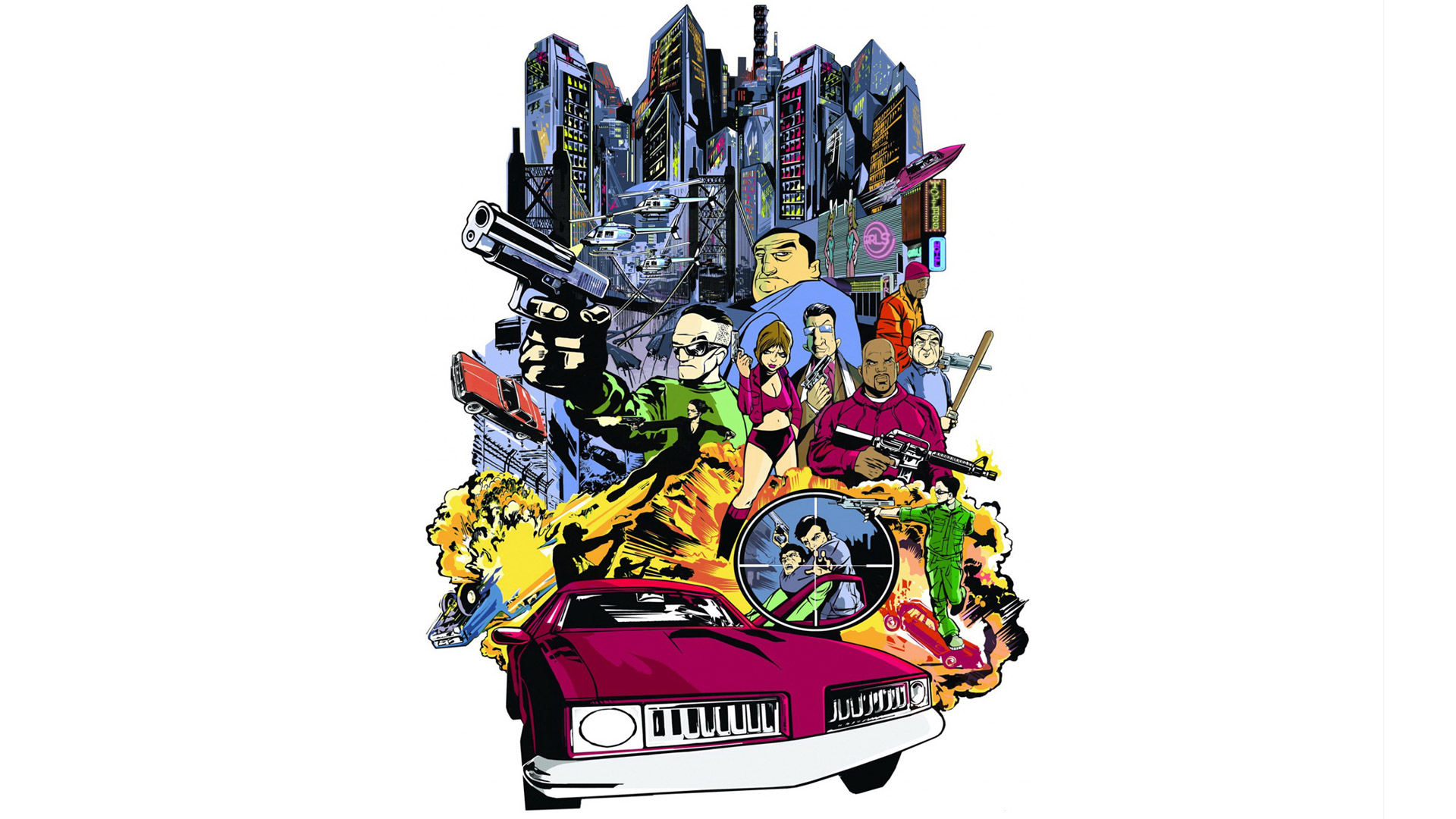
Grand Theft Auto III
LumiScore?Our 0–100 score for how developmentally beneficial and low-risk this game is for children. Higher is better.
Crecimiento
50/100
Valor de Crecimiento
- Conciencia Espacial
- Coordinación Ojo-Mano
- Motricidad Fina
Riesgo
BAJO
Patrones de Interacción
Presión mínima para gastar o jugar en exceso.
Atención
Consejo experto para padres
Los padres deben ser conscientes de la clasificación M del juego debido a su contenido explícito. Considere jugar junto a su hijo o establecer límites de tiempo estrictos para controlar la exposición a temas violentos y maduros, y discuta la narrativa del juego y las elecciones de personajes con su hijo.
Principales habilidades desarrolladas
Áreas de desarrollo
Representación?¿Qué tan diversos son los personajes del juego en cuanto a género y etnia? Mayor = representación más auténtica. Solo se muestra — no afecta la recomendación de tiempo.
Test de Bechdel?El test de Bechdel comprueba si un juego tiene al menos dos personajes femeninos con nombre que hablan entre sí sobre algo que no sea un hombre. Una medida sencilla de representación.— No supera el test
Aunque Grand Theft Auto III presenta varios personajes femeninos nombrados como Maria Latore y Asuka Kasen, sus interacciones, como Asuka protegiendo a Maria, están casi exclusivamente impulsadas por o centradas en personajes masculinos (por ejemplo, Salvatore, Claude) o en conflictos de bandas dominados por hombres, sin cumplir el tercer criterio.
Lo que tu hijo/a desarrolla
Grand Theft Auto III ofrece una experiencia de mundo abierto que desafía a los jugadores con conciencia espacial, coordinación ojo-mano y tiempo de reacción a través de sus mecánicas de conducción y combate. Los jugadores desarrollan habilidades de resolución de problemas completando varios objetivos de misión y navegando el complejo entorno urbano, mientras que los desafíos adaptativos aseguran una curva de aprendizaje continua.
⚖️Cómo se debatió esta puntuaciónMostrar transcripción
Dos modelos de IA debatieron esta puntuación en 2 rondas: un Defensor argumentando a favor de las puntuaciones más altas posibles, y un Crítico argumentando a favor de las más bajas. La puntuación final es el promedio de sus posiciones en la ronda 2.
=== Round 1 ===

ADVOCATE (arguing HIGH):
B1: problemSolving=5, spatialAwareness=5, strategicThinking=5, criticalThinking=5, memoryAttention=4, creativity=4, readingLanguage=3, mathSystems=1, learningTransfer=4, adaptiveChallenge=4
B2: teamwork=0, communication=0, empathy=1, emotionalRegulation=2, ethicalReasoning=2, positiveSocial=1
B3: handEyeCoord=5, fineMotor=4, reactionTime=5, physicalActivity=0
R1: variableRewards=2, streakMechanics=0, lossAversion=2, fomoEvents=0, stoppingBarriers=1, notifications=0, nearMiss=2, infinitePlay=3, escalatingCommitment=2, variableRewardFreq=2
R2: spendingCeiling=0, payToWin=0, currencyObfuscation=0, spendingPrompts=0, childTargeting=0, adPressure=0, subscriptionPressure=0, socialSpending=0
R3: socialObligation=0, competitiveToxicity=0, strangerRisk=0, socialComparison=0, identitySelfWorth=1, privacyRisk=0
Reasoning: Grand Theft Auto III, a pioneering open-world action game, offers substantial cognitive and motor benefits through its demanding gameplay. The intricate urban environment and multi-faceted missions compel players to engage in high-level problem-solving, strategic thinking, spatial awareness, and critical thinking to succeed. Furthermore, the intense vehicle pursuits and combat scenarios significantly develop hand-eye coordination, fine motor skills, and reaction times. Crucially, as a single-player experience with no microtransactions, loot boxes, or online social components, GTA III presents exceptionally low financial and social risks, while its engagement mechanics are moderate compared to modern addictive titles. These factors underscore its value in fostering core developmental skills within a contained, player-driven narrative.

CRITIC (arguing LOW):
B1: problemSolving=3, spatialAwareness=4, strategicThinking=3, criticalThinking=2, memoryAttention=3, creativity=1, readingLanguage=2, mathSystems=0, learningTransfer=2, adaptiveChallenge=3
B2: teamwork=0, communication=0, empathy=1, emotionalRegulation=0, ethicalReasoning=0, positiveSocial=0
B3: handEyeCoord=4, fineMotor=3, reactionTime=4, physicalActivity=0
R1: variableRewards=2, streakMechanics=1, lossAversion=2, fomoEvents=0, stoppingBarriers=2, notifications=1, nearMiss=2, infinitePlay=2, escalatingCommitment=2, variableRewardFreq=2
R2: spendingCeiling=0, payToWin=0, currencyObfuscation=0, spendingPrompts=0, childTargeting=0, adPressure=0, subscriptionPressure=0, socialSpending=0
R3: socialObligation=0, competitiveToxicity=0, strangerRisk=0, socialComparison=0, identitySelfWorth=0, privacyRisk=0
Reasoning: Grand Theft Auto III is a strictly single-player experience, leading to zero scores for teamwork, communication, and positive social interaction. The game's narrative and mechanics, centered on criminal activities and revenge, offer no active development of empathy, emotional regulation, or ethical reasoning. While its open-world design and mission structure incorporate variable rewards and escalating commitment, justifying higher R1 scores, the absence of multiplayer, microtransactions, or social online features results in a clean slate of zero for all R2 and R3 risks.


=== Round 2 ===

ADVOCATE (arguing HIGH):
B1: problemSolving=4, spatialAwareness=5, strategicThinking=4, criticalThinking=4, memoryAttention=4, creativity=2, readingLanguage=2, mathSystems=0, learningTransfer=3, adaptiveChallenge=4
B2: teamwork=0, communication=0, empathy=2, emotionalRegulation=2, ethicalReasoning=1, positiveSocial=0
B3: handEyeCoord=5, fineMotor=4, reactionTime=5, physicalActivity=0
R1: variableRewards=2, streakMechanics=1, lossAversion=2, fomoEvents=0, stoppingBarriers=2, notifications=1, nearMiss=2, infinitePlay=2, escalatingCommitment=2, variableRewardFreq=2
R2: spendingCeiling=0, payToWin=0, currencyObfuscation=0, spendingPrompts=0, childTargeting=0, adPressure=0, subscriptionPressure=0, socialSpending=0
R3: socialObligation=0, competitiveToxicity=0, strangerRisk=0, socialComparison=0, identitySelfWorth=0, privacyRisk=0
Reasoning: Grand Theft Auto III, while single-player, demands significant cognitive and motor skill engagement. Players consistently utilize problem-solving, strategic thinking, and adaptive challenge in mission planning and execution, alongside acute spatial awareness for navigating Liberty City. The intense driving and combat scenarios critically enhance hand-eye coordination and reaction time. Furthermore, exposure to the game's narrative can subtly foster emotional regulation and narrative empathy by engaging with complex character motivations and consequences, pushing social-emotional benefits beyond a mere zero.

CRITIC (arguing LOW):
B1: problemSolving=4, spatialAwareness=5, strategicThinking=4, criticalThinking=3, memoryAttention=4, creativity=2, readingLanguage=3, mathSystems=1, learningTransfer=3, adaptiveChallenge=4
B2: teamwork=0, communication=0, empathy=0, emotionalRegulation=0, ethicalReasoning=0, positiveSocial=1
B3: handEyeCoord=5, fineMotor=4, reactionTime=5, physicalActivity=0
R1: variableRewards=3, streakMechanics=0, lossAversion=2, fomoEvents=0, stoppingBarriers=2, notifications=0, nearMiss=2, infinitePlay=3, escalatingCommitment=2, variableRewardFreq=2
R2: spendingCeiling=0, payToWin=0, currencyObfuscation=0, spendingPrompts=0, childTargeting=0, adPressure=0, subscriptionPressure=0, socialSpending=0
R3: socialObligation=0, competitiveToxicity=0, strangerRisk=0, socialComparison=0, identitySelfWorth=1, privacyRisk=0
Reasoning: While GTA III offers engaging open-world exploration and action, the advocate overstates its cognitive benefits; 'high-level' critical thinking and creativity are not actively developed by following mission objectives, even in an open environment. Crucially, as a single-player game, its social-emotional benefits are minimal, with narrative empathy not equating to interactive social development, and the criminal context offering little for ethical reasoning. Motor benefits are accurately high given the action gameplay. Risks for R1 are slightly understated due to common engagement patterns inherent to open-world design, but R2 and R3 remain appropriately low given the absence of microtransactions or multiplayer features.

=== Final (weighted 40% advocate / 60% critic, Round 2) ===
B1: problemSolving=4, spatialAwareness=5, strategicThinking=4, criticalThinking=3, memoryAttention=4, creativity=2, readingLanguage=3, mathSystems=1, learningTransfer=3, adaptiveChallenge=4
B2: teamwork=0, communication=0, empathy=1, emotionalRegulation=1, ethicalReasoning=0, positiveSocial=1
B3: handEyeCoord=5, fineMotor=4, reactionTime=5, physicalActivity=0
R1: variableRewards=3, streakMechanics=0, lossAversion=2, fomoEvents=0, stoppingBarriers=2, notifications=0, nearMiss=2, infinitePlay=3, escalatingCommitment=2, variableRewardFreq=2
R2: spendingCeiling=0, payToWin=0, currencyObfuscation=0, spendingPrompts=0, childTargeting=0, adPressure=0, subscriptionPressure=0, socialSpending=0
R3: socialObligation=0, competitiveToxicity=0, strangerRisk=0, socialComparison=0, identitySelfWorth=1, privacyRisk=0
Curascore: 60  BDS: 0.500  RIS: 0.254
Cumplimiento normativo
Toca una insignia para ver detalles. Gris = aún no evaluado.
Sobre este juego
Grand Theft Auto III is an open-world action game, a part of the criminal franchise GTA. As the first in the series 3D game with high-quality textures, GTA III became exemplary in its genre.