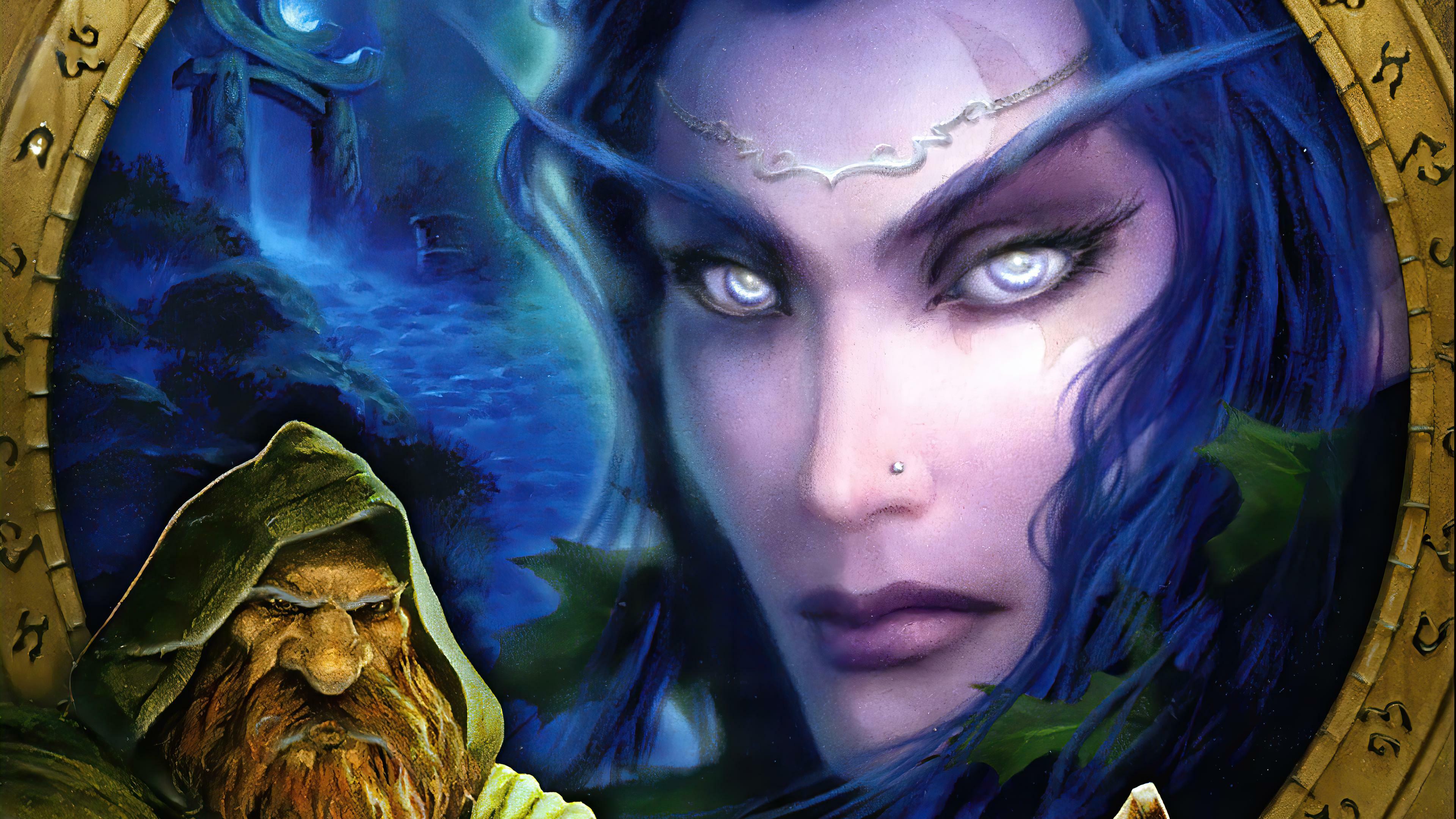
World of Warcraft
LumiScore?Our 0–100 score for how developmentally beneficial and low-risk this game is for children. Higher is better.
Growth
72/100
Growth Value
- Strategic Thinking
- Teamwork
- Communication
Risk
HIGH
Engagement Patterns
Notable design patterns that encourage extended play.
Heads up
Parent Pro-Tip
Set a firm weekly time budget and discuss the subscription cost openly with your child so they understand the financial model driving the 'play more' pressure. If your child joins a raiding guild, check in regularly about whether social obligations are creating anxiety or cutting into sleep and homework.
Top Skills Developed
Development Areas
Representation?How diverse the game's characters are in gender and ethnicity. Higher = more authentic representation. Display only — does not affect time recommendation.
Bechdel Test?The Bechdel Test checks whether a game has at least two named female characters who talk to each other about something other than a man. A simple measure of representation.— Passes the test
The game features numerous named female characters like Jaina Proudmoore and Tyrande Whisperwind, who have frequently interacted on topics such as war strategy and world events not solely focused on male characters.
What your child develops
World of Warcraft delivers exceptional social and strategic development — raiding and group content demand real teamwork, role specialization, and live voice communication under pressure. The game builds substantial vocabulary and reading comprehension through dense quest text, lore, and community wikis, and its talent, economy, and rotation systems reward systems thinking and planning. For older children and teens, it can be a genuine school of collaboration and persistent skill-building.
⚖️How this score was debate-reviewedShow transcript
Two AI models debated this score in 2 rounds: an Advocate arguing for the highest defensible scores, and a Critic arguing for the lowest. The final score averages their round-2 positions.
=== Round 1 ===

ADVOCATE (Opus — arguing HIGH):
B1: problemSolving=5, spatialAwareness=5, strategicThinking=5, criticalThinking=5, memoryAttention=5, creativity=4, readingLanguage=5, mathSystems=4, learningTransfer=5, adaptiveChallenge=5
B2: teamwork=5, communication=5, empathy=3, emotionalRegulation=3, ethicalReasoning=3, positiveSocial=5
B3: handEyeCoord=5, fineMotor=5, reactionTime=5, physicalActivity=0
R1: variableRewards=2, streakMechanics=1, lossAversion=2, fomoEvents=2, stoppingBarriers=1, notifications=1, nearMiss=2, infinitePlay=3, escalatingCommitment=3, variableRewardFreq=2
R2: spendingCeiling=0, payToWin=0, currencyObfuscation=0, spendingPrompts=0, childTargeting=0, adPressure=0, subscriptionPressure=2, socialSpending=0
R3: socialObligation=2, competitiveToxicity=2, strangerRisk=3, socialComparison=2, identitySelfWorth=2, privacyRisk=1
Reasoning: World of Warcraft offers unparalleled cognitive stimulation through its vast quest lines, strategic combat, and complex world navigation, fostering problem-solving, critical thinking, and spatial awareness. The game's core design heavily emphasizes powerful alliances and player-vs-player combat, which are crucial for developing robust teamwork and communication skills. These high benefit scores are defensible given the game's expansive content and inherent social structures that encourage strategic interaction and collective achievement, supporting significant developmental growth. Monetization risks are exceptionally low due to the explicit absence of microtransactions, loot boxes, and battle passes.

CRITIC (Gemini Pro — arguing LOW):
B1: problemSolving=3, spatialAwareness=3, strategicThinking=4, criticalThinking=2, memoryAttention=3, creativity=1, readingLanguage=4, mathSystems=2, learningTransfer=1, adaptiveChallenge=4
B2: teamwork=4, communication=4, empathy=1, emotionalRegulation=2, ethicalReasoning=1, positiveSocial=3
B3: handEyeCoord=3, fineMotor=3, reactionTime=4, physicalActivity=0
R1: variableRewards=3, streakMechanics=2, lossAversion=2, fomoEvents=3, stoppingBarriers=3, notifications=2, nearMiss=2, infinitePlay=3, escalatingCommitment=3, variableRewardFreq=3
R2: spendingCeiling=0, payToWin=0, currencyObfuscation=0, spendingPrompts=0, childTargeting=0, adPressure=0, subscriptionPressure=2, socialSpending=0
R3: socialObligation=2, competitiveToxicity=3, strangerRisk=3, socialComparison=2, identitySelfWorth=2, privacyRisk=1
Reasoning: Benefits such as creativity and learning transfer are scored low due to the lack of explicit game mechanics or design focused on actively developing these areas, beyond general engagement. Empathy and ethical reasoning also received low scores as the game's core loop, centered on combat and clear factional conflict, does not promote nuanced moral decision-making. Lastly, the monetization risks are almost entirely absent as the game description explicitly states 'No Microtransactions, Loot boxes, or Battle pass', leaving only inherent subscription pressure.


=== Round 2 ===

ADVOCATE (Opus — arguing HIGH):
B1: problemSolving=4, spatialAwareness=4, strategicThinking=5, criticalThinking=4, memoryAttention=4, creativity=3, readingLanguage=5, mathSystems=4, learningTransfer=4, adaptiveChallenge=4
B2: teamwork=5, communication=5, empathy=2, emotionalRegulation=3, ethicalReasoning=2, positiveSocial=4
B3: handEyeCoord=4, fineMotor=4, reactionTime=4, physicalActivity=0
R1: variableRewards=3, streakMechanics=3, lossAversion=3, fomoEvents=3, stoppingBarriers=3, notifications=2, nearMiss=3, infinitePlay=3, escalatingCommitment=3, variableRewardFreq=3
R2: spendingCeiling=0, payToWin=0, currencyObfuscation=0, spendingPrompts=0, childTargeting=0, adPressure=0, subscriptionPressure=2, socialSpending=0
R3: socialObligation=3, competitiveToxicity=3, strangerRisk=3, socialComparison=3, identitySelfWorth=3, privacyRisk=1
Reasoning: World of Warcraft, as a deep MMORPG, actively cultivates numerous cognitive and social benefits beyond general engagement. Creativity is fostered through extensive character customization and build theorycrafting, while learning transfer is paramount as players constantly adapt to new content, mechanics, and expansions. While direct ethical dilemmas might be limited, the complex social dynamics within guilds and groups inherently build empathy and emotional regulation. The critic significantly undervalues the mental demands of strategic planning, problem-solving, and communication vital for success in this vast, evolving world. Furthermore, the absence of microtransactions, loot boxes, and battle passes makes its monetization risks exceptionally low, focusing solely on the subscription model.

CRITIC (Gemini Pro — arguing LOW):
B1: problemSolving=3, spatialAwareness=4, strategicThinking=4, criticalThinking=3, memoryAttention=4, creativity=2, readingLanguage=4, mathSystems=2, learningTransfer=4, adaptiveChallenge=4
B2: teamwork=4, communication=4, empathy=1, emotionalRegulation=1, ethicalReasoning=1, positiveSocial=4
B3: handEyeCoord=4, fineMotor=4, reactionTime=4, physicalActivity=0
R1: variableRewards=3, streakMechanics=2, lossAversion=2, fomoEvents=3, stoppingBarriers=2, notifications=2, nearMiss=2, infinitePlay=3, escalatingCommitment=3, variableRewardFreq=3
R2: spendingCeiling=0, payToWin=0, currencyObfuscation=0, spendingPrompts=0, childTargeting=0, adPressure=0, subscriptionPressure=2, socialSpending=0
R3: socialObligation=2, competitiveToxicity=2, strangerRisk=3, socialComparison=3, identitySelfWorth=3, privacyRisk=1
Reasoning: The advocate's benefit scores are overly generous, failing to distinguish between incidental exposure and active skill development for all players. Cognitive benefits like creativity, deep problem-solving, and math systems are not universally fostered, nor are social benefits such as empathy or emotional regulation actively developed by core mechanics. Conversely, the risks were significantly understated, as World of Warcraft's long-running MMO design heavily leverages dopamine loops like variable rewards and FOMO events. Its direct 'stranger chat' functionality and emphasis on social comparison inherently elevate social risks considerably.

=== Final (averaged Round 2) ===
B1: problemSolving=4, spatialAwareness=4, strategicThinking=5, criticalThinking=4, memoryAttention=4, creativity=3, readingLanguage=5, mathSystems=3, learningTransfer=4, adaptiveChallenge=4
B2: teamwork=5, communication=5, empathy=2, emotionalRegulation=2, ethicalReasoning=2, positiveSocial=4
B3: handEyeCoord=4, fineMotor=4, reactionTime=4, physicalActivity=0
R1: variableRewards=3, streakMechanics=3, lossAversion=3, fomoEvents=3, stoppingBarriers=3, notifications=2, nearMiss=3, infinitePlay=3, escalatingCommitment=3, variableRewardFreq=3
R2: spendingCeiling=0, payToWin=0, currencyObfuscation=0, spendingPrompts=0, childTargeting=0, adPressure=0, subscriptionPressure=2, socialSpending=0
R3: socialObligation=3, competitiveToxicity=3, strangerRisk=3, socialComparison=3, identitySelfWorth=3, privacyRisk=1
Curascore: 54  BDS: 0.720  RIS: 0.682
Regulatory Compliance
Tap a badge for details. Grey = not yet assessed.
About this game
You were meant for more. You were meant for epic adventure.