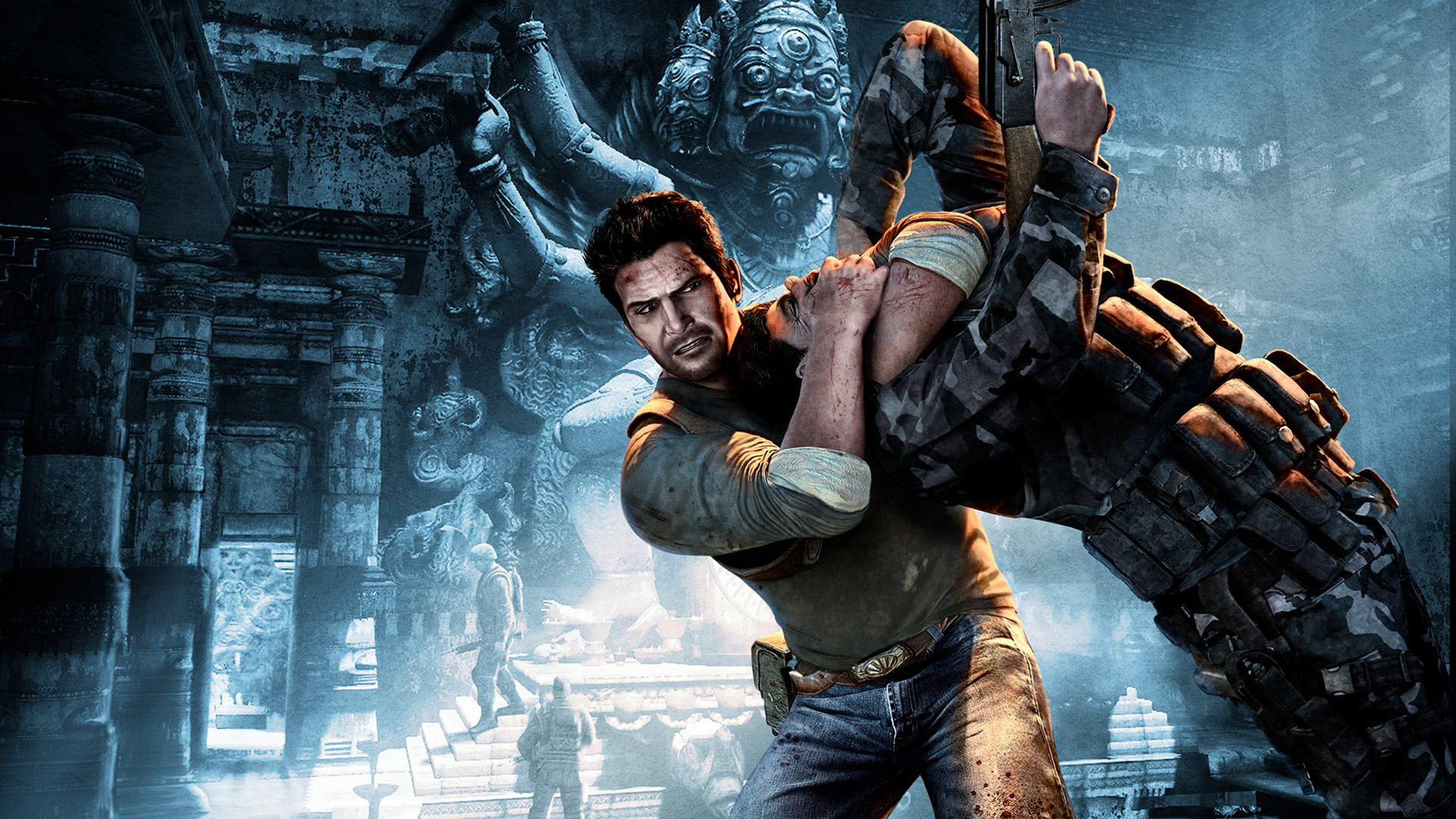
Uncharted 2: Among Thieves
LumiScore
Growth
68/100
Growth Value
- Spatial Awareness
- Hand-Eye Coordination
- Reaction Time
Risk
MODERATE
Engagement Patterns
Some engagement mechanics worth discussing.
Heads up
Parent Pro-Tip
This is one of the safest games in terms of engagement design — feel confident letting your child set the pace. If they are under 12, consider watching the first chapter together to gauge comfort with the combat and intensity before they play independently.
Top Skills Developed
Development Areas
Representation?How diverse the game's characters are in gender and ethnicity. Higher = more authentic representation. Display only — does not affect time recommendation.
Bechdel Test?The Bechdel Test checks whether a game has at least two named female characters who talk to each other about something other than a man. A simple measure of representation.— Passes the test
Elena Fisher and Chloe Frazer are two named female characters who directly interact in multiple scenes, and their discussions often revolve around the mission objectives, puzzles, or combat strategies, not solely Nathan Drake.
What your child develops
Uncharted 2 delivers strong spatial awareness and hand-eye coordination through its climbing, traversal, and cover-based combat mechanics. Environmental puzzles and ancient-ruin exploration encourage observation and deductive reasoning, while its cinematic storytelling builds empathy and narrative engagement. The globe-trotting historical and archaeological themes offer mild learning transfer around world cultures and history.
⚖️How this score was debate-reviewedShow transcript
Two AI models debated this score in 2 rounds: an Advocate arguing for the highest defensible scores, and a Critic arguing for the lowest. The final score averages their round-2 positions.
=== Round 1 ===

ADVOCATE (arguing HIGH):
B1: problemSolving=5, spatialAwareness=5, strategicThinking=5, criticalThinking=5, memoryAttention=4, creativity=3, readingLanguage=4, mathSystems=1, learningTransfer=4, adaptiveChallenge=5
B2: teamwork=5, communication=5, empathy=3, emotionalRegulation=3, ethicalReasoning=2, positiveSocial=4
B3: handEyeCoord=5, fineMotor=4, reactionTime=5, physicalActivity=0
R1: variableRewards=3, streakMechanics=1, lossAversion=2, fomoEvents=0, stoppingBarriers=1, notifications=0, nearMiss=2, infinitePlay=2, escalatingCommitment=2, variableRewardFreq=3
R2: spendingCeiling=0, payToWin=0, currencyObfuscation=0, spendingPrompts=0, childTargeting=0, adPressure=0, subscriptionPressure=0, socialSpending=0
R3: socialObligation=1, competitiveToxicity=2, strangerRisk=3, socialComparison=2, identitySelfWorth=1, privacyRisk=1
Reasoning: Uncharted 2: Among Thieves offers substantial cognitive benefits through its complex riddles, strategic combat, and adaptive environmental navigation, fostering high problem-solving, critical thinking, and spatial awareness. The game's multiplayer is a significant social asset, with co-op adventure and competitive battle modes actively developing teamwork, communication, and positive social engagement. Motor skills are also highly engaged, requiring superior hand-eye coordination and reaction time for its intense action sequences. While the 101 hidden treasures and multiplayer introduce elements of variable rewards and potential for stranger chat, the game's clear narrative progression and absence of exploitative monetization strategies mitigate these risks effectively, ensuring a largely beneficial experience.

CRITIC (arguing LOW):
B1: problemSolving=3, spatialAwareness=4, strategicThinking=3, criticalThinking=3, memoryAttention=3, creativity=1, readingLanguage=2, mathSystems=0, learningTransfer=3, adaptiveChallenge=2
B2: teamwork=3, communication=3, empathy=0, emotionalRegulation=0, ethicalReasoning=0, positiveSocial=1
B3: handEyeCoord=4, fineMotor=3, reactionTime=4, physicalActivity=0
R1: variableRewards=3, streakMechanics=0, lossAversion=1, fomoEvents=0, stoppingBarriers=1, notifications=0, nearMiss=1, infinitePlay=2, escalatingCommitment=2, variableRewardFreq=2
R2: spendingCeiling=0, payToWin=0, currencyObfuscation=0, spendingPrompts=0, childTargeting=0, adPressure=0, subscriptionPressure=0, socialSpending=0
R3: socialObligation=1, competitiveToxicity=3, strangerRisk=3, socialComparison=2, identitySelfWorth=1, privacyRisk=1
Reasoning: My scores reflect a critical evaluation of Uncharted 2's developmental impact. Benefit scores for B1 Creativity, MathSystems, and B2 Empathy, EmotionalRegulation, and EthicalReasoning are exceptionally low as the game lacks explicit design to foster these skills through interactive gameplay, relying instead on linear narrative which does not meet the 'actively develops' criteria. While the game does offer multiplayer, the core experience remains single-player focused, thus limiting scores for direct social development. Conversely, risk scores in R1 and R3 are higher due to the presence of variable rewards in treasure hunting and the inherent dangers of competitive online play with stranger chat, respectively. However, R2 monetization risks are zero, as the game contains no predatory spending mechanics.


=== Round 2 ===

ADVOCATE (arguing HIGH):
B1: problemSolving=4, spatialAwareness=5, strategicThinking=4, criticalThinking=4, memoryAttention=4, creativity=2, readingLanguage=3, mathSystems=0, learningTransfer=4, adaptiveChallenge=4
B2: teamwork=4, communication=4, empathy=0, emotionalRegulation=0, ethicalReasoning=0, positiveSocial=3
B3: handEyeCoord=4, fineMotor=4, reactionTime=4, physicalActivity=0
R1: variableRewards=3, streakMechanics=0, lossAversion=1, fomoEvents=0, stoppingBarriers=1, notifications=0, nearMiss=1, infinitePlay=2, escalatingCommitment=2, variableRewardFreq=2
R2: spendingCeiling=0, payToWin=0, currencyObfuscation=0, spendingPrompts=0, childTargeting=0, adPressure=0, subscriptionPressure=0, socialSpending=0
R3: socialObligation=1, competitiveToxicity=3, strangerRisk=3, socialComparison=2, identitySelfWorth=1, privacyRisk=1
Reasoning: The critic's assessment significantly undervalues the developmental benefits of Uncharted 2. The game's intricate riddles, complex environmental navigation, and varied combat scenarios actively cultivate problem-solving, spatial awareness, and adaptive challenge. The explicit co-operative multiplayer mode, involving shared problem-solving and communication, clearly elevates social benefits by fostering genuine teamwork and positive social interaction. The dynamic and diverse gameplay experiences consistently demand higher cognitive engagement than credited. While risks are acknowledged, especially in competitive online play, the game's overall design prioritizes active engagement and skill development.

CRITIC (arguing LOW):
B1: problemSolving=5, spatialAwareness=5, strategicThinking=4, criticalThinking=4, memoryAttention=4, creativity=2, readingLanguage=3, mathSystems=1, learningTransfer=4, adaptiveChallenge=5
B2: teamwork=5, communication=5, empathy=1, emotionalRegulation=1, ethicalReasoning=1, positiveSocial=4
B3: handEyeCoord=5, fineMotor=4, reactionTime=5, physicalActivity=0
R1: variableRewards=3, streakMechanics=1, lossAversion=2, fomoEvents=0, stoppingBarriers=1, notifications=0, nearMiss=2, infinitePlay=2, escalatingCommitment=2, variableRewardFreq=3
R2: spendingCeiling=0, payToWin=0, currencyObfuscation=0, spendingPrompts=0, childTargeting=0, adPressure=0, subscriptionPressure=0, socialSpending=0
R3: socialObligation=1, competitiveToxicity=2, strangerRisk=3, socialComparison=2, identitySelfWorth=1, privacyRisk=1
Reasoning: The advocate's cognitive scores were slightly inflated; while problem-solving is strong, critical and strategic thinking were less distinct and creativity was not explicitly demonstrated. Social-emotional benefits were significantly overstated; multiplayer fosters teamwork and communication, but narrative alone cannot justify high empathy, emotional regulation, or ethical reasoning scores without interactive social mechanics. Risk scores, particularly for stranger chat, were largely defensible. Overall, the benefits are good but not as universally high as initially claimed.

=== Final (weighted 40% advocate / 60% critic, Round 2) ===
B1: problemSolving=5, spatialAwareness=5, strategicThinking=4, criticalThinking=4, memoryAttention=4, creativity=2, readingLanguage=3, mathSystems=1, learningTransfer=4, adaptiveChallenge=5
B2: teamwork=5, communication=5, empathy=1, emotionalRegulation=1, ethicalReasoning=1, positiveSocial=4
B3: handEyeCoord=5, fineMotor=4, reactionTime=5, physicalActivity=0
R1: variableRewards=3, streakMechanics=1, lossAversion=2, fomoEvents=0, stoppingBarriers=1, notifications=0, nearMiss=2, infinitePlay=2, escalatingCommitment=2, variableRewardFreq=3
R2: spendingCeiling=0, payToWin=0, currencyObfuscation=0, spendingPrompts=0, childTargeting=0, adPressure=0, subscriptionPressure=0, socialSpending=0
R3: socialObligation=1, competitiveToxicity=2, strangerRisk=3, socialComparison=2, identitySelfWorth=1, privacyRisk=1
Curascore: 65  BDS: 0.680  RIS: 0.379
Regulatory Compliance
Tap a badge for details. Grey = not yet assessed.
About this game
In Uncharted 2, as in the other Uncharted games, the hero is the adventurer and hidden treasure seeker Nathan Drake. Riddles are no less important part of the gameplay than fights, chases and travels through exotic landscapes and hard-to-reach places.