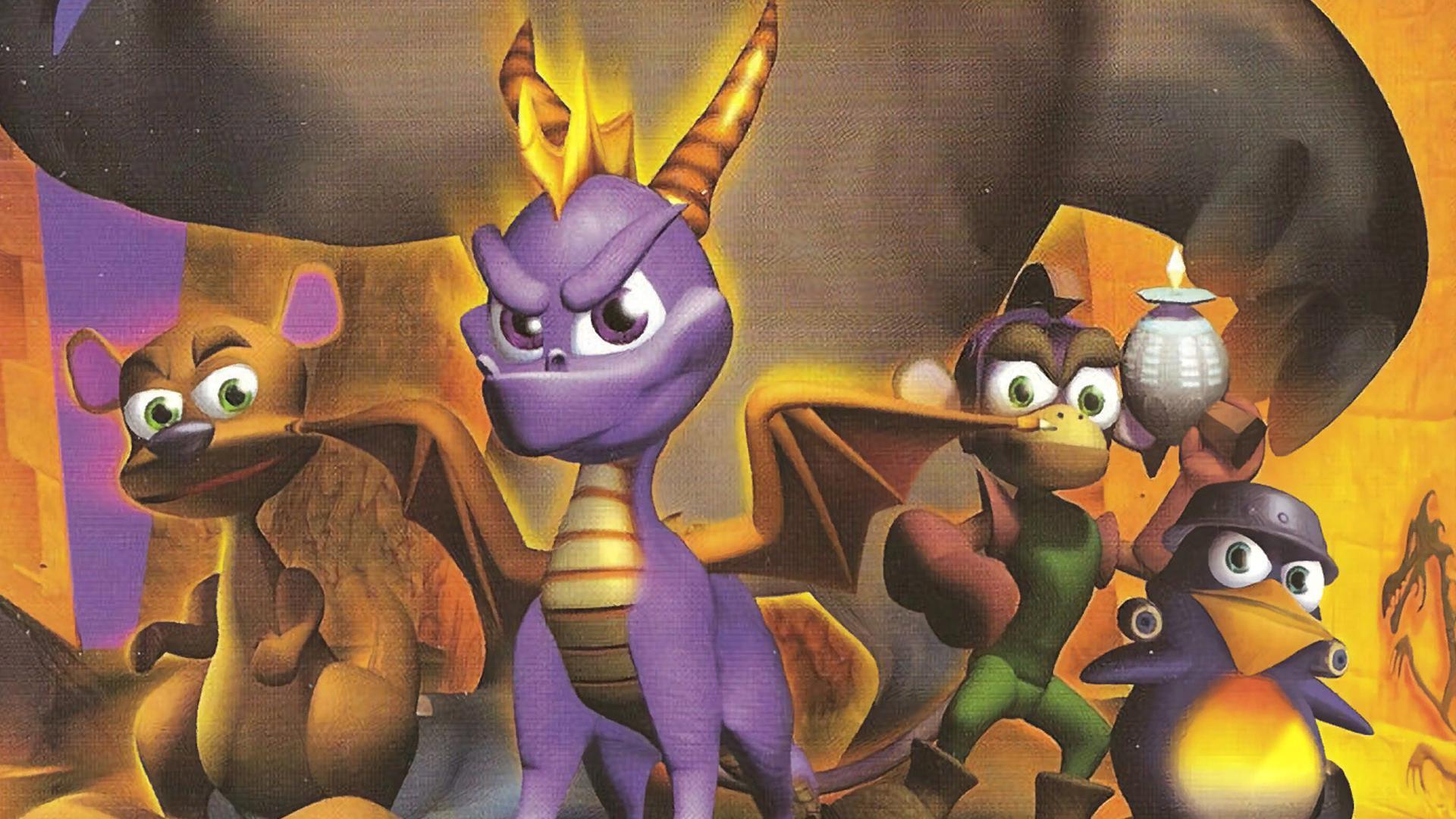
Spyro: Year of the Dragon
LumiScore
Growth
50/100
Growth Value
- Spatial Awareness
- Hand-Eye Coordination
- Problem Solving
Risk
LOW
Engagement Patterns
Minimal pressure to spend or play excessively.
Heads up
Parent Pro-Tip
This is one of the safest and most developmentally positive games available for young children — feel comfortable allowing generous play sessions. If your child tends to lose track of time, use the natural homeworld transitions as easy, low-conflict stopping points.
Top Skills Developed
Development Areas
Representation?How diverse the game's characters are in gender and ethnicity. Higher = more authentic representation. Display only — does not affect time recommendation.
Bechdel Test?The Bechdel Test checks whether a game has at least two named female characters who talk to each other about something other than a man. A simple measure of representation.— Passes the test
The game features several named female characters, including Bianca the Rabbit and The Sorceress. These two characters interact multiple times throughout the game, discussing their plan to steal the dragon eggs and The Sorceress's quest for power and immortality, which is not primarily about a male character.
What your child develops
Spyro: Year of the Dragon is a rich 3D platformer that develops spatial awareness and hand-eye coordination through expansive, multi-layered worlds that reward exploration and precise movement. Diverse mini-games featuring characters like Sheila, Bentley, and Agent 9 introduce varied challenges that exercise problem-solving, reaction time, and adaptability. The collectathon structure encourages thoroughness, memory, and light strategic thinking as children plan which eggs to pursue and how to navigate each homeworld.
⚖️How this score was debate-reviewedShow transcript
Two AI models debated this score in 2 rounds: an Advocate arguing for the highest defensible scores, and a Critic arguing for the lowest. The final score averages their round-2 positions.
=== Round 1 ===

ADVOCATE (arguing HIGH):
B1: problemSolving=5, spatialAwareness=5, strategicThinking=4, criticalThinking=4, memoryAttention=5, creativity=2, readingLanguage=1, mathSystems=0, learningTransfer=4, adaptiveChallenge=4
B2: teamwork=0, communication=0, empathy=3, emotionalRegulation=3, ethicalReasoning=2, positiveSocial=1
B3: handEyeCoord=5, fineMotor=5, reactionTime=5, physicalActivity=0
R1: variableRewards=2, streakMechanics=1, lossAversion=1, fomoEvents=0, stoppingBarriers=1, notifications=0, nearMiss=1, infinitePlay=1, escalatingCommitment=1, variableRewardFreq=2
R2: spendingCeiling=0, payToWin=0, currencyObfuscation=0, spendingPrompts=0, childTargeting=0, adPressure=0, subscriptionPressure=0, socialSpending=0
R3: socialObligation=0, competitiveToxicity=0, strangerRisk=0, socialComparison=0, identitySelfWorth=1, privacyRisk=0
Reasoning: Spyro: Year of the Dragon excels in fostering cognitive and motor skills, earning high scores in B1 and B3. The game's complex 3D platforming environments, diverse minigames, and the overarching quest to collect 150 eggs rigorously challenge problem-solving, spatial awareness, and memory, while demanding precise hand-eye coordination, fine motor control, and quick reaction times. Furthermore, its complete absence of microtransactions, loot boxes, or any form of predatory monetization leads to an exemplary R2 score of zero, highlighting a design that respects the player and focuses solely on engaging gameplay.

CRITIC (arguing LOW):
B1: problemSolving=3, spatialAwareness=4, strategicThinking=3, criticalThinking=3, memoryAttention=3, creativity=1, readingLanguage=2, mathSystems=1, learningTransfer=3, adaptiveChallenge=3
B2: teamwork=0, communication=0, empathy=1, emotionalRegulation=2, ethicalReasoning=1, positiveSocial=0
B3: handEyeCoord=4, fineMotor=3, reactionTime=3, physicalActivity=0
R1: variableRewards=2, streakMechanics=0, lossAversion=2, fomoEvents=0, stoppingBarriers=1, notifications=0, nearMiss=1, infinitePlay=0, escalatingCommitment=1, variableRewardFreq=2
R2: spendingCeiling=0, payToWin=0, currencyObfuscation=0, spendingPrompts=0, childTargeting=0, adPressure=0, subscriptionPressure=0, socialSpending=0
R3: socialObligation=0, competitiveToxicity=0, strangerRisk=0, socialComparison=0, identitySelfWorth=0, privacyRisk=0
Reasoning: These scores prioritize the game's actual mechanics over potential benefits, aligning with Spyro: Year of the Dragon's single-player, linear platformer design. Its lack of interactive social features dictates near-zero scores for all B2 categories, as narrative empathy alone does not develop social-emotional skills. While offering foundational cognitive and motor development inherent to its genre, the game's finite progression and absence of modern monetization or online social elements keep both benefits and risks appropriately low, preventing inflated scores for an older title.


=== Round 2 ===

ADVOCATE (arguing HIGH):
B1: problemSolving=5, spatialAwareness=5, strategicThinking=4, criticalThinking=4, memoryAttention=4, creativity=1, readingLanguage=2, mathSystems=1, learningTransfer=4, adaptiveChallenge=4
B2: teamwork=0, communication=0, empathy=1, emotionalRegulation=2, ethicalReasoning=1, positiveSocial=0
B3: handEyeCoord=5, fineMotor=4, reactionTime=4, physicalActivity=0
R1: variableRewards=3, streakMechanics=0, lossAversion=2, fomoEvents=0, stoppingBarriers=2, notifications=0, nearMiss=2, infinitePlay=0, escalatingCommitment=2, variableRewardFreq=3
R2: spendingCeiling=0, payToWin=0, currencyObfuscation=0, spendingPrompts=0, childTargeting=0, adPressure=0, subscriptionPressure=0, socialSpending=0
R3: socialObligation=0, competitiveToxicity=0, strangerRisk=0, socialComparison=0, identitySelfWorth=0, privacyRisk=0
Reasoning: Spyro: Year of the Dragon, while a classic platformer, offers robust cognitive and motor benefits beyond the critic's assessment. Its complex 3D environments demand high spatial awareness, problem-solving, and adaptive thinking, pushing B1 scores significantly. The precise platforming and varied minigames actively engage hand-eye coordination, fine motor skills, and reaction time, elevating B3. Furthermore, the constant stream of collectibles, new characters, and evolving gameplay mechanics provides a rich, variable reward loop that encourages sustained engagement without relying on predatory modern monetization or social risks, making the R1 scores higher but still benign.

CRITIC (arguing LOW):
B1: problemSolving=5, spatialAwareness=5, strategicThinking=4, criticalThinking=4, memoryAttention=5, creativity=1, readingLanguage=1, mathSystems=0, learningTransfer=4, adaptiveChallenge=4
B2: teamwork=0, communication=0, empathy=0, emotionalRegulation=0, ethicalReasoning=0, positiveSocial=1
B3: handEyeCoord=5, fineMotor=5, reactionTime=5, physicalActivity=0
R1: variableRewards=2, streakMechanics=1, lossAversion=1, fomoEvents=0, stoppingBarriers=1, notifications=0, nearMiss=1, infinitePlay=1, escalatingCommitment=1, variableRewardFreq=2
R2: spendingCeiling=0, payToWin=0, currencyObfuscation=0, spendingPrompts=0, childTargeting=0, adPressure=0, subscriptionPressure=0, socialSpending=0
R3: socialObligation=0, competitiveToxicity=0, strangerRisk=0, socialComparison=0, identitySelfWorth=1, privacyRisk=0
Reasoning: The advocate's B2 scores are indefensible, as this is a single-player game with no interactive social mechanics; narrative empathy does not equate to active social-emotional development. Consequently, empathy, emotional regulation, and ethical reasoning scores must be zero. While cognitive and motor benefits are present, "creativity" is overscored for a platformer that largely guides players through pre-designed challenges. The R2 score of zero for monetization is, however, correctly assessed and commendable for its player-respectful design.

=== Final (weighted 40% advocate / 60% critic, Round 2) ===
B1: problemSolving=5, spatialAwareness=5, strategicThinking=4, criticalThinking=4, memoryAttention=5, creativity=1, readingLanguage=1, mathSystems=0, learningTransfer=4, adaptiveChallenge=4
B2: teamwork=0, communication=0, empathy=0, emotionalRegulation=1, ethicalReasoning=0, positiveSocial=1
B3: handEyeCoord=5, fineMotor=5, reactionTime=5, physicalActivity=0
R1: variableRewards=2, streakMechanics=1, lossAversion=1, fomoEvents=0, stoppingBarriers=1, notifications=0, nearMiss=1, infinitePlay=1, escalatingCommitment=1, variableRewardFreq=2
R2: spendingCeiling=0, payToWin=0, currencyObfuscation=0, spendingPrompts=0, childTargeting=0, adPressure=0, subscriptionPressure=0, socialSpending=0
R3: socialObligation=0, competitiveToxicity=0, strangerRisk=0, socialComparison=0, identitySelfWorth=1, privacyRisk=0
Curascore: 63  BDS: 0.500  RIS: 0.164
Regulatory Compliance
Tap a badge for details. Grey = not yet assessed.
About this game
Spyro: Year of the Dragon (also known as Spyro 3) is a platformer video game developed by Insomniac Games and published by Sony Computer Entertainment for the PlayStation in 2000. Year of the Dragon is the third installment in the Spyro series.