Sid Meier's Civilization IV
LumiScore
Growth
50/100
Growth Value
- Problem Solving
- Strategic Thinking
- Critical Thinking
Risk
LOW
Engagement Patterns
Minimal pressure to spend or play excessively.
Heads up
Parent Pro-Tip
Set a session timer before starting — the turn-based format makes it easy to rationalize 'just one more turn' indefinitely. Consider playing alongside younger children to help them connect the historical civilizations and events in the game to what they learn in school.
Top Skills Developed
Development Areas
Representation?How diverse the game's characters are in gender and ethnicity. Higher = more authentic representation. Display only — does not affect time recommendation.
Bechdel Test?The Bechdel Test checks whether a game has at least two named female characters who talk to each other about something other than a man. A simple measure of representation.— Fails the test
While Civilization IV features multiple named female leaders (e.g., Catherine the Great, Elizabeth I, Isabella, Hatshepsut), they do not directly interact with each other in a narrative sense; their 'interactions' are purely game-mechanic diplomacy screens or AI declarations, lacking dialogue or shared scenes.
What your child develops
Civilization IV is one of the richest strategy games ever made for developing planning, systems thinking, and historical literacy. Children learn to manage economies, weigh diplomatic trade-offs, and think several moves ahead across science, culture, military, and production tracks simultaneously. Real historical civilizations, leaders, technologies, and wonders provide genuine learning transfer into history and social studies.
Regulatory Compliance
Tap a badge for details. Grey = not yet assessed.
About this game
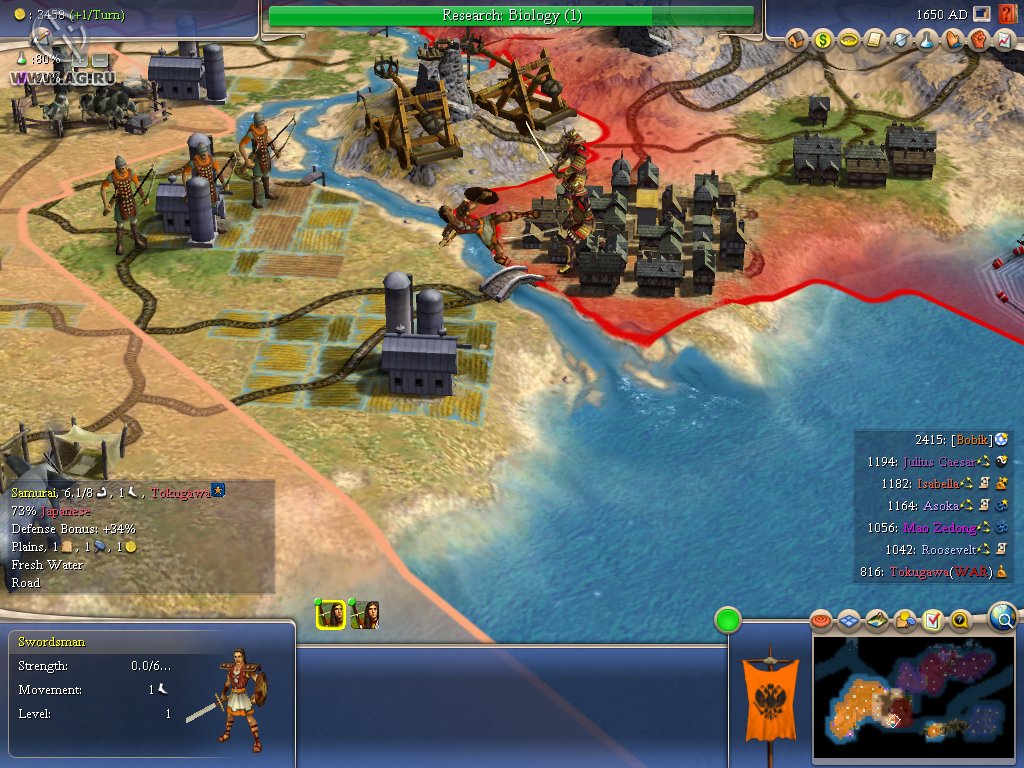
As with the rest of Sid Meier’s Civilization series, the player controls a real historical civilization and leads it from the stone age to the space era. The goal is to develop its culture, science, and economy and to conquer the neighboring countries if you feel like it.