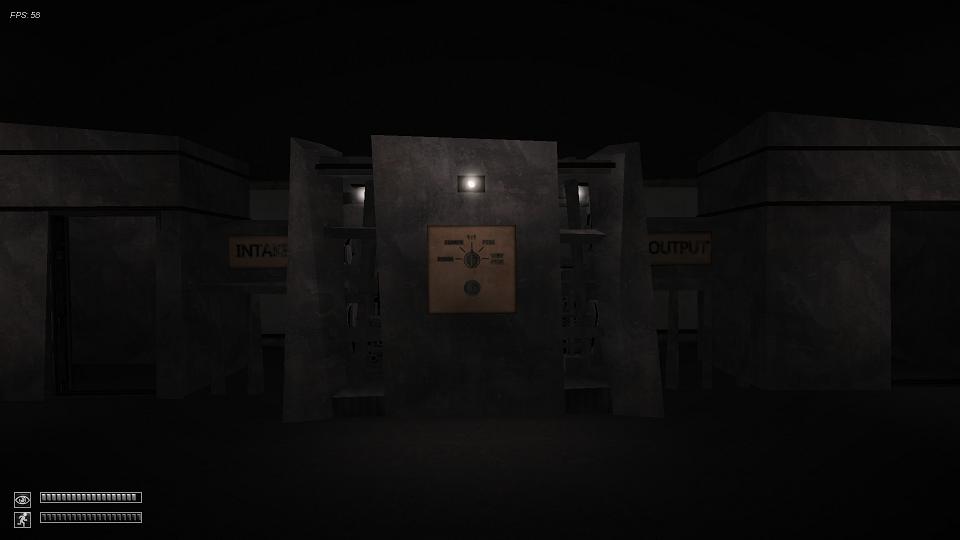
SCP: Containment Breach
LumiScore
Growth
55/100
Growth Value
- Problem Solving
- Spatial Awareness
- Critical Thinking
Risk
LOW
Engagement Patterns
Minimal pressure to spend or play excessively.
Heads up
Parent Pro-Tip
Parents should be aware of the intense horror elements and assess if the content is appropriate for their child's emotional maturity. It is advisable to set strict session limits due to the game's lack of natural stopping points and its psychological design that can encourage continuous play.
Top Skills Developed
Development Areas
Representation?How diverse the game's characters are in gender and ethnicity. Higher = more authentic representation. Display only — does not affect time recommendation.
Bechdel Test?The Bechdel Test checks whether a game has at least two named female characters who talk to each other about something other than a man. A simple measure of representation.— N/A — no named characters
The game features no named characters.
Parent Pro-Tip
Engage with your child about their problem-solving strategies and critical thinking during gameplay. Discussing how they navigate threats and manage resources can reinforce these cognitive benefits.
What your child develops
SCP: Containment Breach can enhance problem-solving skills through navigating complex environments and critical thinking as players deduce how to avoid or contain various SCPs. It also strengthens memory and attention as players recall SCP behaviors and map layouts.
⚖️How this score was debate-reviewedShow transcript
Two AI models debated this score in 2 rounds: an Advocate arguing for the highest defensible scores, and a Critic arguing for the lowest. The final score averages their round-2 positions.
=== Round 1 ===

ADVOCATE (arguing HIGH):
B1: problemSolving=5, spatialAwareness=5, strategicThinking=5, criticalThinking=5, memoryAttention=5, creativity=4, readingLanguage=3, mathSystems=1, learningTransfer=5, adaptiveChallenge=5
B2: teamwork=0, communication=0, empathy=2, emotionalRegulation=4, ethicalReasoning=1, positiveSocial=1
B3: handEyeCoord=4, fineMotor=3, reactionTime=5, physicalActivity=0
R1: variableRewards=2, streakMechanics=0, lossAversion=3, fomoEvents=0, stoppingBarriers=3, notifications=0, nearMiss=3, infinitePlay=3, escalatingCommitment=2, variableRewardFreq=2
R2: spendingCeiling=0, payToWin=0, currencyObfuscation=0, spendingPrompts=0, childTargeting=0, adPressure=0, subscriptionPressure=0, socialSpending=0
R3: socialObligation=0, competitiveToxicity=0, strangerRisk=0, socialComparison=0, identitySelfWorth=1, privacyRisk=0
Reasoning: SCP: Containment Breach excels in fostering cognitive development, with exceptionally high scores across problem-solving, spatial awareness, and strategic thinking as players navigate complex, procedurally generated environments while evading dangerous entities. The game demands critical thinking and memory to identify SCP behaviors and adapt to ever-changing threats, promoting a high degree of learning transfer and adaptive challenge. Emotional regulation is also strongly engaged as players learn to manage fear and tension in high-stakes survival scenarios, while the complete absence of microtransactions, loot boxes, and multiplayer chat ensures minimal monetization and social risks.

CRITIC (arguing LOW):
B1: problemSolving=4, spatialAwareness=3, strategicThinking=3, criticalThinking=3, memoryAttention=4, creativity=1, readingLanguage=2, mathSystems=0, learningTransfer=2, adaptiveChallenge=4
B2: teamwork=0, communication=0, empathy=1, emotionalRegulation=1, ethicalReasoning=0, positiveSocial=0
B3: handEyeCoord=3, fineMotor=2, reactionTime=4, physicalActivity=0
R1: variableRewards=1, streakMechanics=0, lossAversion=2, fomoEvents=0, stoppingBarriers=1, notifications=0, nearMiss=2, infinitePlay=2, escalatingCommitment=1, variableRewardFreq=1
R2: spendingCeiling=0, payToWin=0, currencyObfuscation=0, spendingPrompts=0, childTargeting=0, adPressure=0, subscriptionPressure=0, socialSpending=0
R3: socialObligation=0, competitiveToxicity=0, strangerRisk=0, socialComparison=0, identitySelfWorth=0, privacyRisk=0
Reasoning: The low scores for B2 (Social) are due to SCP: Containment Breach being an exclusively single-player game with no co-op or multiplayer components, offering no interactive social development. Similarly, the game scores zero in R2 (Monetization) and R3 (Social Risk) because it contains no microtransactions, loot boxes, battle passes, or any online social interactions such as chat. These design choices eliminate financial exploitation and social risks. While the horror elements might elicit emotional responses, they do not translate into social-emotional learning opportunities.


=== Round 2 ===

ADVOCATE (arguing HIGH):
B1: problemSolving=5, spatialAwareness=4, strategicThinking=4, criticalThinking=4, memoryAttention=5, creativity=3, readingLanguage=3, mathSystems=0, learningTransfer=4, adaptiveChallenge=5
B2: teamwork=0, communication=0, empathy=1, emotionalRegulation=3, ethicalReasoning=0, positiveSocial=0
B3: handEyeCoord=4, fineMotor=3, reactionTime=5, physicalActivity=0
R1: variableRewards=2, streakMechanics=0, lossAversion=3, fomoEvents=0, stoppingBarriers=2, notifications=0, nearMiss=3, infinitePlay=3, escalatingCommitment=2, variableRewardFreq=2
R2: spendingCeiling=0, payToWin=0, currencyObfuscation=0, spendingPrompts=0, childTargeting=0, adPressure=0, subscriptionPressure=0, socialSpending=0
R3: socialObligation=0, competitiveToxicity=0, strangerRisk=0, socialComparison=0, identitySelfWorth=0, privacyRisk=0
Reasoning: The critic significantly understates the cognitive and motor benefits of SCP: Containment Breach. Its procedurally generated environments, emergent SCP behaviors, and high-stakes survival scenarios demand exceptional problem-solving, strategic thinking, spatial awareness, and memory, alongside rapid reaction times and fine motor control. Furthermore, the game's intense horror elements provide a strong, albeit non-social, exercise in emotional regulation, as players must maintain composure under extreme stress. The elevated R1 scores reflect the inherent psychological engagement mechanisms of a survival horror game, driving repeated attempts through variable rewards and near-miss experiences rather than exploitative monetization.

CRITIC (arguing LOW):
B1: problemSolving=5, spatialAwareness=5, strategicThinking=5, criticalThinking=5, memoryAttention=5, creativity=1, readingLanguage=1, mathSystems=1, learningTransfer=3, adaptiveChallenge=5
B2: teamwork=0, communication=0, empathy=0, emotionalRegulation=4, ethicalReasoning=0, positiveSocial=1
B3: handEyeCoord=4, fineMotor=3, reactionTime=5, physicalActivity=0
R1: variableRewards=2, streakMechanics=0, lossAversion=3, fomoEvents=0, stoppingBarriers=3, notifications=0, nearMiss=3, infinitePlay=3, escalatingCommitment=2, variableRewardFreq=2
R2: spendingCeiling=0, payToWin=0, currencyObfuscation=0, spendingPrompts=0, childTargeting=0, adPressure=0, subscriptionPressure=0, socialSpending=0
R3: socialObligation=0, competitiveToxicity=0, strangerRisk=0, socialComparison=0, identitySelfWorth=0, privacyRisk=0
Reasoning: While SCP: Containment Breach offers strong cognitive challenges in problem-solving, spatial awareness, and adaptive thinking due to its procedural nature and survival mechanics, the advocate overstates benefits in creativity, reading, and learning transfer without sufficient evidence of active development in these areas. As a strictly single-player experience, social benefits for empathy and ethical reasoning are absent, and social risks, including identity/self-worth, are minimal. The game does, however, present significant dopamine risks inherent in its survival horror design, such as loss aversion and near-miss mechanics, which are appropriately scored.

=== Final (weighted 40% advocate / 60% critic, Round 2) ===
B1: problemSolving=5, spatialAwareness=5, strategicThinking=5, criticalThinking=5, memoryAttention=5, creativity=2, readingLanguage=2, mathSystems=1, learningTransfer=3, adaptiveChallenge=5
B2: teamwork=0, communication=0, empathy=0, emotionalRegulation=4, ethicalReasoning=0, positiveSocial=1
B3: handEyeCoord=4, fineMotor=3, reactionTime=5, physicalActivity=0
R1: variableRewards=2, streakMechanics=0, lossAversion=3, fomoEvents=0, stoppingBarriers=3, notifications=0, nearMiss=3, infinitePlay=3, escalatingCommitment=2, variableRewardFreq=2
R2: spendingCeiling=0, payToWin=0, currencyObfuscation=0, spendingPrompts=0, childTargeting=0, adPressure=0, subscriptionPressure=0, socialSpending=0
R3: socialObligation=0, competitiveToxicity=0, strangerRisk=0, socialComparison=0, identitySelfWorth=0, privacyRisk=0
Curascore: 63  BDS: 0.550  RIS: 0.270
Regulatory Compliance
Tap a badge for details. Grey = not yet assessed.