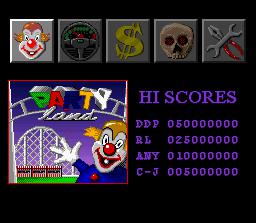
Pinball Fantasies (1992)
LumiScore
Growth
26/100
Growth Value
- Hand-Eye Coordination
- Reaction Time
- Spatial Awareness
Risk
LOW
Engagement Patterns
Minimal pressure to spend or play excessively.
Heads up
Parent Pro-Tip
Set a timer for 20-30 minute sessions
Top Skills Developed
Development Areas
Representation?How diverse the game's characters are in gender and ethnicity. Higher = more authentic representation. Display only — does not affect time recommendation.
Bechdel Test?The Bechdel Test checks whether a game has at least two named female characters who talk to each other about something other than a man. A simple measure of representation.— N/A — no named characters
Abstract pinball simulation with no characters or narrative dialogue.
Parent Pro-Tip
The arcade nature of pinball can create a 'just one more game' pull. A timer helps children practice self-regulation while still enjoying the motor skill and spatial reasoning benefits of this classic game.
What your child develops
Pinball Fantasies is a classic arcade pinball simulation that primarily develops motor skills and spatial reasoning. The game requires strong hand-eye coordination (4/5) and reaction time (4/5) as players must respond rapidly to the ball's movement and activate flippers with precise timing. Fine motor control (3/5) is essential for skilled flipper manipulation. Cognitively, the game offers moderate spatial awareness development (3/5) as players track ball trajectories and predict ricochets. Strategic thinking (2/5) and problem-solving (2/5) emerge as players learn optimal shot sequences, target priorities, and table-specific strategies across the four different tables. Memory and attention (2/5) support learning table layouts and scoring opportunities. The game provides adaptive challenge (2/5) through increasingly difficult objectives and score thresholds. With minimal narrative or creative elements and purely solo gameplay, the game offers little in social-emotional development beyond basic emotional regulation (1/5) when managing frustration from ball losses.
Regulatory Compliance
Tap a badge for details. Grey = not yet assessed.
About this game
Pinball Fantasies is a pinball game for the Commodore Amiga personal computer developed by Digital Illusions in late 1992, as a sequel to Pinball Dreams. A further sequel was released in 1995 called Pinball Illusions.