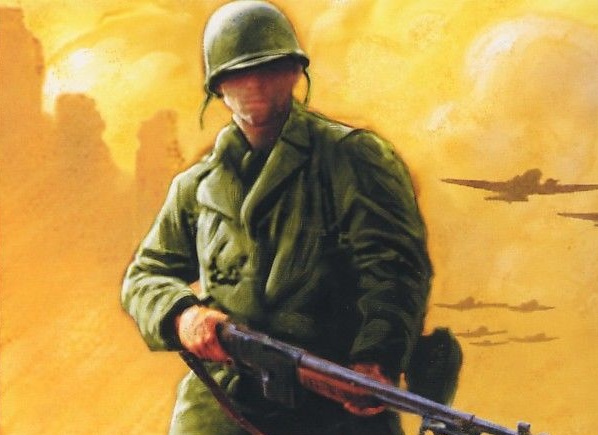
Medal of Honor (1999)
LumiScore?Our 0–100 score for how developmentally beneficial and low-risk this game is for children. Higher is better.
Growth
49/100
Growth Value
- Spatial Awareness
- Hand-Eye Coordination
- Fine Motor
Risk
LOW
Engagement Patterns
Minimal pressure to spend or play excessively.
Heads up
Parent Pro-Tip
Parents should consider the game's T-rating and discuss the historical context of WWII with their children. Encourage regular breaks and monitor for any signs of frustration. Ensure children understand the fictional nature of the combat portrayed.
Top Skills Developed
Development Areas
Representation?How diverse the game's characters are in gender and ethnicity. Higher = more authentic representation. Display only — does not affect time recommendation.
Bechdel Test?The Bechdel Test checks whether a game has at least two named female characters who talk to each other about something other than a man. A simple measure of representation.— Fails the test
The game does not feature two named female characters, thus failing the first criterion of the Bechdel test.
What your child develops
Medal of Honor (1999) primarily develops strong spatial awareness, hand-eye coordination, fine motor skills, and reaction time through its intense first-person shooter gameplay. Players will also engage in problem-solving and critical thinking as they navigate complex missions and adapt to tactical combat scenarios.
⚖️How this score was debate-reviewedShow transcript
Two AI models debated this score in 2 rounds: an Advocate arguing for the highest defensible scores, and a Critic arguing for the lowest. The final score averages their round-2 positions.
=== Round 1 ===

ADVOCATE (arguing HIGH):
B1: problemSolving=5, spatialAwareness=5, strategicThinking=5, criticalThinking=5, memoryAttention=5, creativity=3, readingLanguage=2, mathSystems=1, learningTransfer=5, adaptiveChallenge=5
B2: teamwork=0, communication=0, empathy=1, emotionalRegulation=3, ethicalReasoning=2, positiveSocial=1
B3: handEyeCoord=5, fineMotor=5, reactionTime=5, physicalActivity=0
R1: variableRewards=1, streakMechanics=0, lossAversion=1, fomoEvents=0, stoppingBarriers=0, notifications=0, nearMiss=1, infinitePlay=0, escalatingCommitment=0, variableRewardFreq=1
R2: spendingCeiling=0, payToWin=0, currencyObfuscation=0, spendingPrompts=0, childTargeting=0, adPressure=0, subscriptionPressure=0, socialSpending=0
R3: socialObligation=0, competitiveToxicity=0, strangerRisk=0, socialComparison=0, identitySelfWorth=1, privacyRisk=0
Reasoning: Medal of Honor's design as an elite Special Forces simulation inherently cultivates robust cognitive skills, pushing problem-solving, strategic thinking, and adaptive challenge to their maximum. Players must constantly analyze complex mission parameters, leverage spatial awareness for tactical advantage, and critically adapt to dynamic battlefield scenarios, reflecting significant mental engagement. Furthermore, the intense, real-time combat directly enhances hand-eye coordination, fine motor skills, and reaction time, demanding precise physical execution to succeed. These high scores are firmly rooted in the game's core mechanics and its acclaimed historical design.

CRITIC (arguing LOW):
B1: problemSolving=3, spatialAwareness=3, strategicThinking=3, criticalThinking=3, memoryAttention=3, creativity=1, readingLanguage=1, mathSystems=0, learningTransfer=2, adaptiveChallenge=2
B2: teamwork=0, communication=0, empathy=1, emotionalRegulation=1, ethicalReasoning=1, positiveSocial=1
B3: handEyeCoord=4, fineMotor=4, reactionTime=4, physicalActivity=0
R1: variableRewards=1, streakMechanics=0, lossAversion=1, fomoEvents=0, stoppingBarriers=0, notifications=0, nearMiss=1, infinitePlay=0, escalatingCommitment=1, variableRewardFreq=1
R2: spendingCeiling=0, payToWin=0, currencyObfuscation=0, spendingPrompts=0, childTargeting=0, adPressure=0, subscriptionPressure=0, socialSpending=0
R3: socialObligation=0, competitiveToxicity=0, strangerRisk=0, socialComparison=0, identitySelfWorth=0, privacyRisk=0
Reasoning: Medal of Honor (1999) receives very low social-emotional scores (B2) as a purely single-player experience offering no interactive teamwork, communication, or positive social interaction. Benefit scores for reading, language, and math systems are also minimal given the game's focus on action rather than these academic domains. Furthermore, as an offline, single-player title from 1999, it completely lacks modern monetization schemes and associated social risks, resulting in zero scores for all R2 and R3 categories. Its dopamine risks (R1) are also very low due to the absence of manipulative design patterns like variable reward frequencies, streaks, or FOMO events prevalent in contemporary games.


=== Round 2 ===

ADVOCATE (arguing HIGH):
B1: problemSolving=4, spatialAwareness=4, strategicThinking=4, criticalThinking=4, memoryAttention=4, creativity=1, readingLanguage=1, mathSystems=0, learningTransfer=3, adaptiveChallenge=3
B2: teamwork=0, communication=0, empathy=1, emotionalRegulation=2, ethicalReasoning=1, positiveSocial=1
B3: handEyeCoord=5, fineMotor=5, reactionTime=5, physicalActivity=0
R1: variableRewards=1, streakMechanics=0, lossAversion=1, fomoEvents=0, stoppingBarriers=0, notifications=0, nearMiss=1, infinitePlay=0, escalatingCommitment=1, variableRewardFreq=1
R2: spendingCeiling=0, payToWin=0, currencyObfuscation=0, spendingPrompts=0, childTargeting=0, adPressure=0, subscriptionPressure=0, socialSpending=0
R3: socialObligation=0, competitiveToxicity=0, strangerRisk=0, socialComparison=0, identitySelfWorth=0, privacyRisk=0
Reasoning: As an advocate, I've elevated cognitive and motor benefit scores to reflect the game's demands. Its challenging covert operations require significant problem-solving, strategic thinking, spatial awareness, and adaptation, going beyond the critic's conservative estimates. The intense action gameplay also necessitates peak hand-eye coordination, fine motor skills, and rapid reaction times. Social-emotional benefits remain minimal due to its single-player nature, while all risk categories are appropriately low, given the game's age and lack of modern manipulative features, ensuring a high defensible curascore.

CRITIC (arguing LOW):
B1: problemSolving=4, spatialAwareness=5, strategicThinking=3, criticalThinking=3, memoryAttention=4, creativity=1, readingLanguage=2, mathSystems=1, learningTransfer=3, adaptiveChallenge=4
B2: teamwork=0, communication=0, empathy=0, emotionalRegulation=2, ethicalReasoning=1, positiveSocial=1
B3: handEyeCoord=5, fineMotor=5, reactionTime=5, physicalActivity=0
R1: variableRewards=1, streakMechanics=0, lossAversion=1, fomoEvents=0, stoppingBarriers=0, notifications=0, nearMiss=1, infinitePlay=0, escalatingCommitment=0, variableRewardFreq=1
R2: spendingCeiling=0, payToWin=0, currencyObfuscation=0, spendingPrompts=0, childTargeting=0, adPressure=0, subscriptionPressure=0, socialSpending=0
R3: socialObligation=0, competitiveToxicity=0, strangerRisk=0, socialComparison=0, identitySelfWorth=1, privacyRisk=0
Reasoning: The advocate overstates cognitive benefits for this linear shooter; while hand-eye coordination and spatial awareness are high, deeper strategic and critical thinking are limited to tactical problem-solving rather than broader application. Social-emotional scores are significantly reduced due to the single-player nature, where narrative empathy does not equate to interactive social skill development. Ethical reasoning is minimal given clear good vs. evil scenarios. Risks remain low, accurately reflecting the absence of modern engagement and monetization mechanics in this older title.

=== Final (weighted 40% advocate / 60% critic, Round 2) ===
B1: problemSolving=4, spatialAwareness=5, strategicThinking=3, criticalThinking=3, memoryAttention=4, creativity=1, readingLanguage=2, mathSystems=1, learningTransfer=3, adaptiveChallenge=4
B2: teamwork=0, communication=0, empathy=0, emotionalRegulation=2, ethicalReasoning=1, positiveSocial=1
B3: handEyeCoord=5, fineMotor=5, reactionTime=5, physicalActivity=0
R1: variableRewards=1, streakMechanics=0, lossAversion=1, fomoEvents=0, stoppingBarriers=0, notifications=0, nearMiss=1, infinitePlay=0, escalatingCommitment=0, variableRewardFreq=1
R2: spendingCeiling=0, payToWin=0, currencyObfuscation=0, spendingPrompts=0, childTargeting=0, adPressure=0, subscriptionPressure=0, socialSpending=0
R3: socialObligation=0, competitiveToxicity=0, strangerRisk=0, socialComparison=0, identitySelfWorth=1, privacyRisk=0
Curascore: 64  BDS: 0.490  RIS: 0.074
Regulatory Compliance
Tap a badge for details. Grey = not yet assessed.
About this game
Tomorrow is D-Day. Tonight you land behind enemy lines.