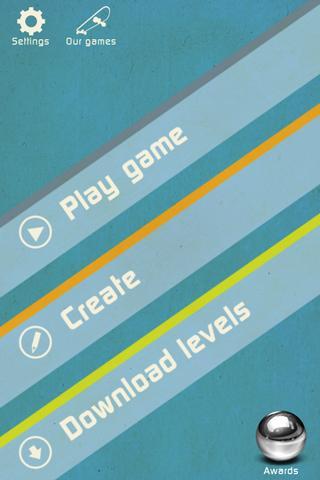
Labyrinth 2
LumiScore
Growth
37/100
Growth Value
- Problem Solving
- Spatial Awareness
- Adaptive Challenge
Risk
LOW
Engagement Patterns
Minimal pressure to spend or play excessively.
Heads up
Parent Pro-Tip
Parents can feel confident that Labyrinth 2 offers a safe and enriching experience. Encourage your child to articulate their maze-solving strategies. Its natural stopping points make it easy to manage screen time.
Top Skills Developed
Development Areas
Representation?How diverse the game's characters are in gender and ethnicity. Higher = more authentic representation. Display only — does not affect time recommendation.
Bechdel Test?The Bechdel Test checks whether a game has at least two named female characters who talk to each other about something other than a man. A simple measure of representation.— N/A — no named characters
The game is an abstract puzzle game where the player controls a 'bright square' through mazes; it has no named characters, narrative, or social interactions whatsoever.
What your child develops
Labyrinth 2 is a relaxing puzzle game that significantly enhances problem-solving and spatial awareness skills as players navigate increasingly complex mazes. It also fosters adaptive challenge mastery and attention through its well-designed progression system. The game requires critical and strategic thinking to find optimal paths.
⚖️How this score was debate-reviewedShow transcript
Two AI models debated this score in 2 rounds: an Advocate arguing for the highest defensible scores, and a Critic arguing for the lowest. The final score averages their round-2 positions.
=== Round 1 ===

ADVOCATE (arguing HIGH):
B1: problemSolving=5, spatialAwareness=5, strategicThinking=5, criticalThinking=5, memoryAttention=5, creativity=1, readingLanguage=0, mathSystems=0, learningTransfer=3, adaptiveChallenge=5
B2: teamwork=0, communication=0, empathy=0, emotionalRegulation=1, ethicalReasoning=0, positiveSocial=0
B3: handEyeCoord=3, fineMotor=3, reactionTime=1, physicalActivity=0
R1: variableRewards=2, streakMechanics=0, lossAversion=1, fomoEvents=0, stoppingBarriers=0, notifications=0, nearMiss=1, infinitePlay=0, escalatingCommitment=0, variableRewardFreq=2
R2: spendingCeiling=0, payToWin=0, currencyObfuscation=0, spendingPrompts=0, childTargeting=0, adPressure=0, subscriptionPressure=0, socialSpending=0
R3: socialObligation=0, competitiveToxicity=0, strangerRisk=0, socialComparison=0, identitySelfWorth=0, privacyRisk=0
Reasoning: As an advocate, I argue for high cognitive scores due to the game's core puzzle mechanic. "Labyrinth 2" inherently challenges and develops problem-solving, spatial awareness, strategic thinking, critical thinking, memory, and adaptive challenge through its 50 increasingly complex mazes. The "relaxing" nature and lack of monetization or social features effectively mitigate common risks, demonstrating a commendable focus on pure gameplay benefits. Minor motor skill development occurs via arrow key controls, while the absence of social elements, microtransactions, and aggressive dopamine loops results in negligible risks across R1, R2, and R3. This game offers substantial cognitive benefits in a remarkably safe environment.

CRITIC (arguing LOW):
B1: problemSolving=4, spatialAwareness=4, strategicThinking=3, criticalThinking=3, memoryAttention=3, creativity=0, readingLanguage=0, mathSystems=0, learningTransfer=1, adaptiveChallenge=4
B2: teamwork=0, communication=0, empathy=0, emotionalRegulation=1, ethicalReasoning=0, positiveSocial=1
B3: handEyeCoord=3, fineMotor=2, reactionTime=1, physicalActivity=0
R1: variableRewards=1, streakMechanics=0, lossAversion=0, fomoEvents=0, stoppingBarriers=0, notifications=0, nearMiss=0, infinitePlay=0, escalatingCommitment=1, variableRewardFreq=1
R2: spendingCeiling=0, payToWin=0, currencyObfuscation=0, spendingPrompts=0, childTargeting=0, adPressure=0, subscriptionPressure=0, socialSpending=0
R3: socialObligation=0, competitiveToxicity=0, strangerRisk=0, socialComparison=0, identitySelfWorth=0, privacyRisk=0
Reasoning: The B2 scores are critically low because "Labyrinth 2" is a strictly single-player puzzle game with no interactive social features, rendering teamwork, communication, and empathy irrelevant according to the rubric. Similarly, creativity, reading/language, and math systems receive zero in B1 as the game solely focuses on maze navigation without explicit integration of these skills. The game presents minimal risk, with all monetization and social risks scoring zero due to the explicit absence of microtransactions, loot boxes, battle passes, and stranger chat, making it a relatively benign experience in terms of potential harm. Dopamine risks are also low, with only minor engagement loops from achievements and basic progression.


=== Round 2 ===

ADVOCATE (arguing HIGH):
B1: problemSolving=5, spatialAwareness=5, strategicThinking=4, criticalThinking=4, memoryAttention=4, creativity=0, readingLanguage=0, mathSystems=0, learningTransfer=4, adaptiveChallenge=5
B2: teamwork=0, communication=0, empathy=0, emotionalRegulation=2, ethicalReasoning=0, positiveSocial=1
B3: handEyeCoord=4, fineMotor=3, reactionTime=1, physicalActivity=0
R1: variableRewards=1, streakMechanics=0, lossAversion=0, fomoEvents=0, stoppingBarriers=0, notifications=0, nearMiss=0, infinitePlay=0, escalatingCommitment=1, variableRewardFreq=1
R2: spendingCeiling=0, payToWin=0, currencyObfuscation=0, spendingPrompts=0, childTargeting=0, adPressure=0, subscriptionPressure=0, socialSpending=0
R3: socialObligation=0, competitiveToxicity=0, strangerRisk=0, socialComparison=0, identitySelfWorth=0, privacyRisk=0
Reasoning: The critic significantly undervalued Labyrinth 2's cognitive benefits. As a maze game with increasing complexity across 50 levels, it inherently demands high levels of problem-solving, spatial awareness, strategic thinking, and memory attention, fostering strong learning transfer. The sustained effort required to navigate increasingly difficult labyrinths and achieve 100 goals also promotes emotional regulation and persistent focus. The explicit absence of monetization and social interaction risks, as confirmed by the game's description, ensures a benign risk profile. This makes it a highly beneficial and low-risk title for developing critical cognitive skills.

CRITIC (arguing LOW):
B1: problemSolving=5, spatialAwareness=5, strategicThinking=4, criticalThinking=3, memoryAttention=4, creativity=1, readingLanguage=0, mathSystems=0, learningTransfer=2, adaptiveChallenge=5
B2: teamwork=0, communication=0, empathy=0, emotionalRegulation=0, ethicalReasoning=0, positiveSocial=0
B3: handEyeCoord=2, fineMotor=1, reactionTime=1, physicalActivity=0
R1: variableRewards=2, streakMechanics=0, lossAversion=1, fomoEvents=0, stoppingBarriers=0, notifications=0, nearMiss=1, infinitePlay=0, escalatingCommitment=0, variableRewardFreq=2
R2: spendingCeiling=0, payToWin=0, currencyObfuscation=0, spendingPrompts=0, childTargeting=0, adPressure=0, subscriptionPressure=0, socialSpending=0
R3: socialObligation=0, competitiveToxicity=0, strangerRisk=0, socialComparison=0, identitySelfWorth=0, privacyRisk=0
Reasoning: While Labyrinth 2 offers clear cognitive benefits, the advocate's scores for strategic thinking, critical thinking, and memory/attention are overstated given the game's 'relaxing' puzzle nature. These are more tactical pathfinding skills rather than broad, deep intellectual development. Furthermore, the game's simple arrow-key controls provide only minimal hand-eye coordination and fine motor development, not the moderate levels suggested. The single-player, non-narrative design means social-emotional development, including emotional regulation, is negligible, thus justifying a score of zero. Overall, the game is safe and offers focused cognitive benefits, but the developmental impact is narrower than presented.

=== Final (weighted 40% advocate / 60% critic, Round 2) ===
B1: problemSolving=5, spatialAwareness=5, strategicThinking=4, criticalThinking=3, memoryAttention=4, creativity=1, readingLanguage=0, mathSystems=0, learningTransfer=3, adaptiveChallenge=5
B2: teamwork=0, communication=0, empathy=0, emotionalRegulation=1, ethicalReasoning=0, positiveSocial=0
B3: handEyeCoord=3, fineMotor=2, reactionTime=1, physicalActivity=0
R1: variableRewards=2, streakMechanics=0, lossAversion=1, fomoEvents=0, stoppingBarriers=0, notifications=0, nearMiss=1, infinitePlay=0, escalatingCommitment=0, variableRewardFreq=2
R2: spendingCeiling=0, payToWin=0, currencyObfuscation=0, spendingPrompts=0, childTargeting=0, adPressure=0, subscriptionPressure=0, socialSpending=0
R3: socialObligation=0, competitiveToxicity=0, strangerRisk=0, socialComparison=0, identitySelfWorth=0, privacyRisk=0
Curascore: 53  BDS: 0.370  RIS: 0.090
Regulatory Compliance
Tap a badge for details. Grey = not yet assessed.
About this game
A relaxing labyrinth game. You need to lead the player (bright square) through a set of fifty mazes to the finish line (transparent square).