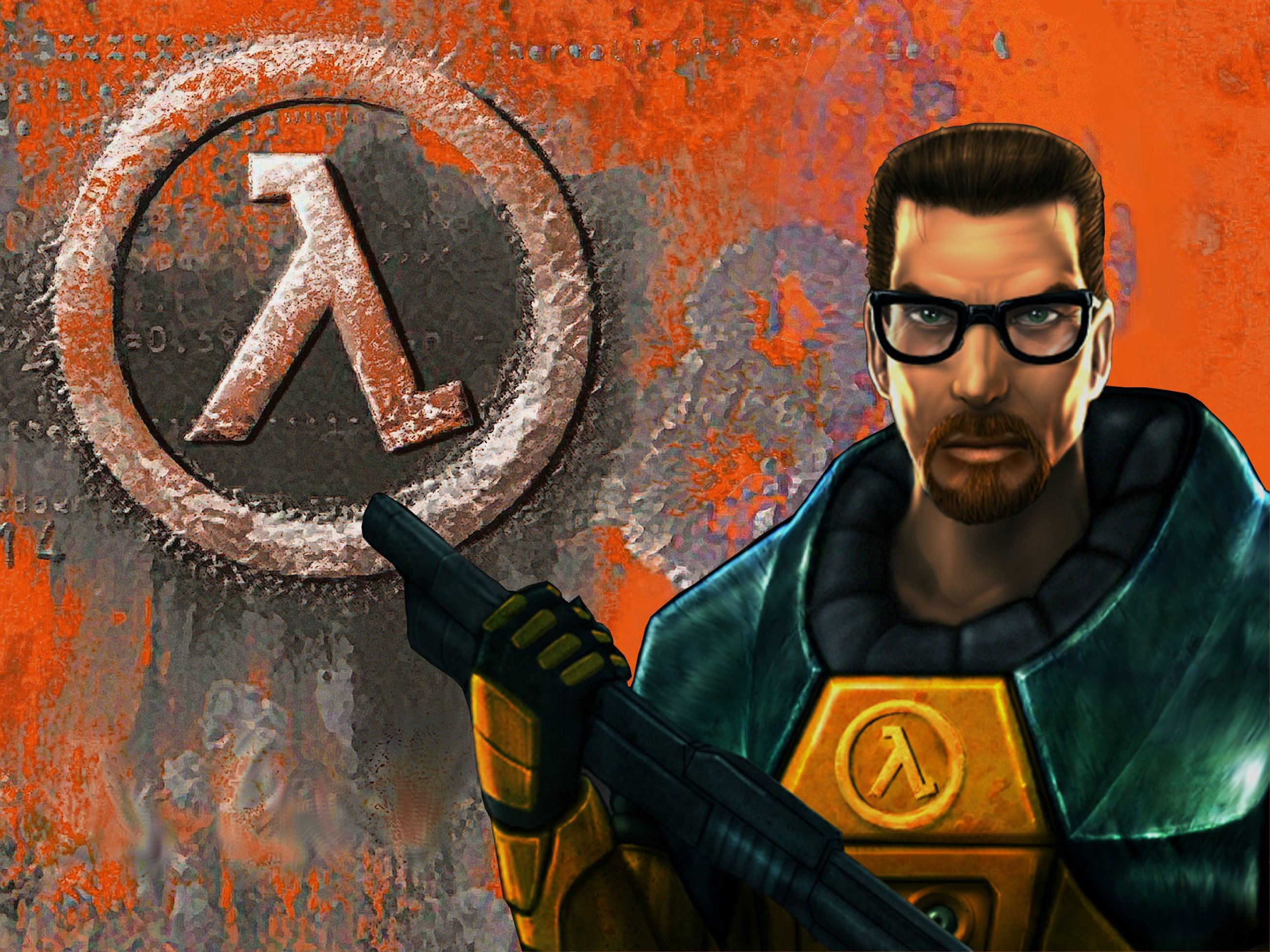
Half-Life
LumiScore
Growth
42/100
Growth Value
- Spatial Awareness
- Hand-Eye Coordination
- Reaction Time
Risk
LOW
Engagement Patterns
Minimal pressure to spend or play excessively.
Heads up
Parent Pro-Tip
Parents should be aware of the game's M-rating due to violence and thematic content. Discuss responsible gaming habits, including saving and taking breaks, to manage potential frustration during challenging sections.
Top Skills Developed
Development Areas
Representation?How diverse the game's characters are in gender and ethnicity. Higher = more authentic representation. Display only — does not affect time recommendation.
Bechdel Test?The Bechdel Test checks whether a game has at least two named female characters who talk to each other about something other than a man. A simple measure of representation.— Fails the test
Half-Life lacks at least two named female characters, therefore failing the first criterion of the Bechdel test.
What your child develops
The game develops spatial awareness, strategic thinking, and hand-eye coordination through challenging combat and environmental navigation. Players learn to adapt to new enemies and weapon mechanics, fostering problem-solving skills in high-pressure situations.
⚖️How this score was debate-reviewedShow transcript
Two AI models debated this score in 2 rounds: an Advocate arguing for the highest defensible scores, and a Critic arguing for the lowest. The final score averages their round-2 positions.
=== Round 1 ===

ADVOCATE (arguing HIGH):
B1: problemSolving=5, spatialAwareness=5, strategicThinking=5, criticalThinking=5, memoryAttention=4, creativity=3, readingLanguage=2, mathSystems=0, learningTransfer=5, adaptiveChallenge=5
B2: teamwork=0, communication=0, empathy=2, emotionalRegulation=1, ethicalReasoning=1, positiveSocial=0
B3: handEyeCoord=5, fineMotor=5, reactionTime=5, physicalActivity=0
R1: variableRewards=1, streakMechanics=0, lossAversion=1, fomoEvents=0, stoppingBarriers=0, notifications=0, nearMiss=0, infinitePlay=0, escalatingCommitment=0, variableRewardFreq=0
R2: spendingCeiling=0, payToWin=0, currencyObfuscation=0, spendingPrompts=0, childTargeting=0, adPressure=0, subscriptionPressure=0, socialSpending=0
R3: socialObligation=0, competitiveToxicity=0, strangerRisk=0, socialComparison=0, identitySelfWorth=1, privacyRisk=0
Reasoning: Half-Life excels in cognitive benefits, demanding high problem-solving, spatial awareness, and strategic thinking due to its complex level design, diverse enemy encounters, and continuous adaptation to new gameplay mechanics. The game also fosters strong motor skills, requiring precise hand-eye coordination, fine motor control for aiming, and rapid reaction times in its intense combat sequences. Furthermore, the game poses minimal risks in monetization and social areas, as it is a single-player experience devoid of microtransactions, loot boxes, or stranger interaction, making any potential social or financial risks negligible.

CRITIC (arguing LOW):
B1: problemSolving=4, spatialAwareness=4, strategicThinking=3, criticalThinking=3, memoryAttention=3, creativity=1, readingLanguage=2, mathSystems=0, learningTransfer=3, adaptiveChallenge=4
B2: teamwork=0, communication=0, empathy=1, emotionalRegulation=1, ethicalReasoning=1, positiveSocial=0
B3: handEyeCoord=5, fineMotor=4, reactionTime=4, physicalActivity=0
R1: variableRewards=1, streakMechanics=0, lossAversion=1, fomoEvents=0, stoppingBarriers=0, notifications=0, nearMiss=1, infinitePlay=0, escalatingCommitment=1, variableRewardFreq=1
R2: spendingCeiling=0, payToWin=0, currencyObfuscation=0, spendingPrompts=0, childTargeting=0, adPressure=0, subscriptionPressure=0, socialSpending=0
R3: socialObligation=0, competitiveToxicity=0, strangerRisk=0, socialComparison=0, identitySelfWorth=0, privacyRisk=0
Reasoning: Half-Life, as a single-player experience without any online or co-operative elements, inherently receives minimal scores in all social-emotional (B2) and social risk (R3) categories. Teamwork, communication, and positive social interaction are completely absent due to the lack of interactive social mechanics. While the narrative may evoke some empathy or require basic emotional regulation during tense moments, these are not active developmental practices rooted in interactive social experiences as demanded by the rubric. Similarly, the absence of microtransactions, loot boxes, and stranger chat eliminates all monetization (R2) and social risks (R3).


=== Round 2 ===

ADVOCATE (arguing HIGH):
B1: problemSolving=4, spatialAwareness=4, strategicThinking=3, criticalThinking=3, memoryAttention=3, creativity=2, readingLanguage=2, mathSystems=0, learningTransfer=3, adaptiveChallenge=4
B2: teamwork=0, communication=0, empathy=2, emotionalRegulation=1, ethicalReasoning=1, positiveSocial=0
B3: handEyeCoord=5, fineMotor=5, reactionTime=4, physicalActivity=0
R1: variableRewards=1, streakMechanics=0, lossAversion=1, fomoEvents=0, stoppingBarriers=0, notifications=0, nearMiss=1, infinitePlay=0, escalatingCommitment=1, variableRewardFreq=0
R2: spendingCeiling=0, payToWin=0, currencyObfuscation=0, spendingPrompts=0, childTargeting=0, adPressure=0, subscriptionPressure=0, socialSpending=0
R3: socialObligation=0, competitiveToxicity=0, strangerRisk=0, socialComparison=0, identitySelfWorth=0, privacyRisk=0
Reasoning: The critic's assessment for Half-Life largely undervalues its cognitive and motor benefits while slightly overstating engagement risks for a linear single-player experience. I advocate for higher defensible scores in B1 by recognizing the game's cultivation of creativity and problem-solving through environmental challenges. Similarly, precise aiming and demanding combat scenarios justify increased scores in B3 for fine motor skills. For B2, the immersive narrative provides a stronger foundation for empathy than initially credited. Conversely, given Half-Life's classic, non-addictive design, the frequency of variable rewards is not a significant risk, allowing for a slight reduction in R1 to align with its true impact.

CRITIC (arguing LOW):
B1: problemSolving=4, spatialAwareness=4, strategicThinking=4, criticalThinking=2, memoryAttention=3, creativity=1, readingLanguage=1, mathSystems=0, learningTransfer=4, adaptiveChallenge=4
B2: teamwork=0, communication=0, empathy=0, emotionalRegulation=0, ethicalReasoning=0, positiveSocial=0
B3: handEyeCoord=5, fineMotor=4, reactionTime=5, physicalActivity=0
R1: variableRewards=1, streakMechanics=0, lossAversion=1, fomoEvents=0, stoppingBarriers=0, notifications=0, nearMiss=1, infinitePlay=0, escalatingCommitment=0, variableRewardFreq=1
R2: spendingCeiling=0, payToWin=0, currencyObfuscation=0, spendingPrompts=0, childTargeting=0, adPressure=0, subscriptionPressure=0, socialSpending=0
R3: socialObligation=0, competitiveToxicity=0, strangerRisk=0, socialComparison=0, identitySelfWorth=0, privacyRisk=0
Reasoning: My scores reflect a rigorous application of the rubric for a single-player shooter. Cognitive benefits are moderated, as Half-Life, while engaging, does not consistently demand the highest levels of critical thinking or creativity from the player. Social-emotional scores are reduced to zero because, as a strictly single-player experience with no interactive social components, the game cannot actively develop skills like empathy or ethical reasoning through social interaction. Motor skills are appropriately high given the game's FPS mechanics. Risks are minimal due to its offline, single-player nature, with minor dopamine risks typical of action games and no monetization or social interaction risks.

=== Final (weighted 40% advocate / 60% critic, Round 2) ===
B1: problemSolving=4, spatialAwareness=4, strategicThinking=4, criticalThinking=2, memoryAttention=3, creativity=1, readingLanguage=1, mathSystems=0, learningTransfer=4, adaptiveChallenge=4
B2: teamwork=0, communication=0, empathy=1, emotionalRegulation=0, ethicalReasoning=0, positiveSocial=0
B3: handEyeCoord=5, fineMotor=4, reactionTime=5, physicalActivity=0
R1: variableRewards=1, streakMechanics=0, lossAversion=1, fomoEvents=0, stoppingBarriers=0, notifications=0, nearMiss=1, infinitePlay=0, escalatingCommitment=0, variableRewardFreq=1
R2: spendingCeiling=0, payToWin=0, currencyObfuscation=0, spendingPrompts=0, childTargeting=0, adPressure=0, subscriptionPressure=0, socialSpending=0
R3: socialObligation=0, competitiveToxicity=0, strangerRisk=0, socialComparison=0, identitySelfWorth=0, privacyRisk=0
Curascore: 58  BDS: 0.420  RIS: 0.060
Regulatory Compliance
Tap a badge for details. Grey = not yet assessed.
About this game
Half-Life is the original game in the series. Being a revolutionary at the time, we follow the story of Gordon Freeman - a silent scientist at the facility called Black Mesa.