Ether One
LumiScore
Growth
41/100
Growth Value
- Problem Solving
- Critical Thinking
- Memory & Attention
Risk
LOW
Engagement Patterns
Minimal pressure to spend or play excessively.
Heads up
Parent Pro-Tip
Set clear time boundaries before starting a play session
Top Skills Developed
Development Areas
Representation?How diverse the game's characters are in gender and ethnicity. Higher = more authentic representation. Display only — does not affect time recommendation.
Bechdel Test?The Bechdel Test checks whether a game has at least two named female characters who talk to each other about something other than a man. A simple measure of representation.— N/A — no named characters
Single-player exploration game focused on investigating one woman's memories; no dialogue between multiple named female characters.
Parent Pro-Tip
While Ether One lacks manipulative hooks, its puzzle-solving nature can create a 'just one more puzzle' mentality, and some puzzle sequences may take 30-45 minutes to complete. Agreeing on specific stopping points (like completing 2-3 puzzles or playing for an hour) helps children practice self-regulation while respecting the game's natural chapter structure. This approach teaches time management without interrupting important puzzle-solving work, and the game's save system supports this by allowing progress to be preserved at any point.
What your child develops
Ether One offers a thoughtful, puzzle-driven experience that exercises multiple cognitive skills. The game's core mechanic of reconstructing memories requires strong problem-solving abilities (4/5) as players piece together environmental clues and solve interconnected puzzles. Memory and attention (4/5) are central to gameplay, as players must remember details from explored areas and connect scattered information. Critical thinking (4/5) is essential for interpreting the narrative's symbolic elements and understanding the relationship between puzzle solutions and story progression. The game promotes empathy (4/5) through its sensitive portrayal of dementia, allowing players to experience cognitive decline from inside a patient's perspective. Spatial awareness (3/5) develops as players navigate the detailed environments and track puzzle locations. Reading and language skills (3/5) are engaged through environmental storytelling, notes, and narrative elements. The game's thoughtful pacing and meaningful subject matter support emotional regulation (3/5) and offer moderate learning transfer (3/5) regarding understanding memory, cognitive health, and empathy for those with dementia.
Regulatory Compliance
Tap a badge for details. Grey = not yet assessed.
About this game
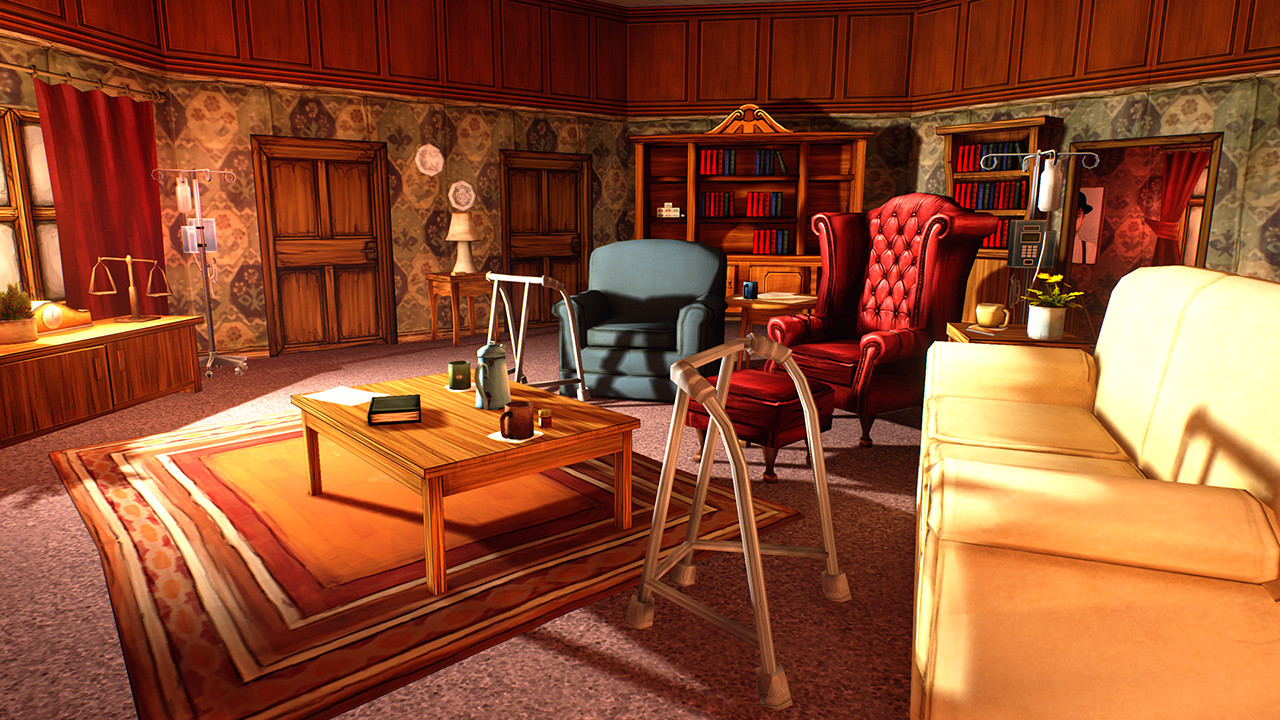
A walking simulator or first-person adventure game from the independent British studio White Paper Games, for which the project became a debut. According to the developers, the game explores the fragility of the human mind.