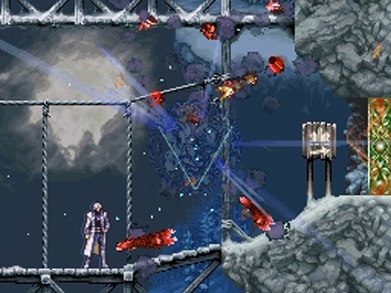
Castlevania: Dawn of Sorrow
LumiScore
Growth
54/100
Growth Value
- Spatial Awareness
- Hand-Eye Coordination
- Reaction Time
Risk
LOW
Engagement Patterns
Minimal pressure to spend or play excessively.
Heads up
Parent Pro-Tip
Encourage your child to describe their strategies for defeating bosses or navigating complex areas. Discuss the narrative elements and character motivations to foster deeper engagement. Because the game has a strong narrative and natural stopping points, it can be a good way to practice self-regulation with screen time.
Top Skills Developed
Development Areas
Representation?How diverse the game's characters are in gender and ethnicity. Higher = more authentic representation. Display only — does not affect time recommendation.
Bechdel Test?The Bechdel Test checks whether a game has at least two named female characters who talk to each other about something other than a man. A simple measure of representation.— Fails the test
No significant female characters with dialogue interacting about something other than a man.
Parent Pro-Tip
This can help reinforce problem-solving and critical thinking skills. Discussing story elements can also encourage reading comprehension and empathy. The game’s inherent structure can aid in developing healthy screen time habits.
What your child develops
Castlevania: Dawn of Sorrow offers a challenging and rewarding experience that hones cognitive skills like problem-solving, strategic thinking, and memory. The intricate castle design encourages spatial awareness and critical thinking. The game's adaptive difficulty ensures a continuous learning curve, promoting learning transfer.
Regulatory Compliance
Tap a badge for details. Grey = not yet assessed.
About this game
The year is 2036, one year after the events of Castlevania®: Aria of Sorrow™. Soma Cruz finds himself at the center of a mysterious cults plan to resurrect their evil lord and master Dracula.