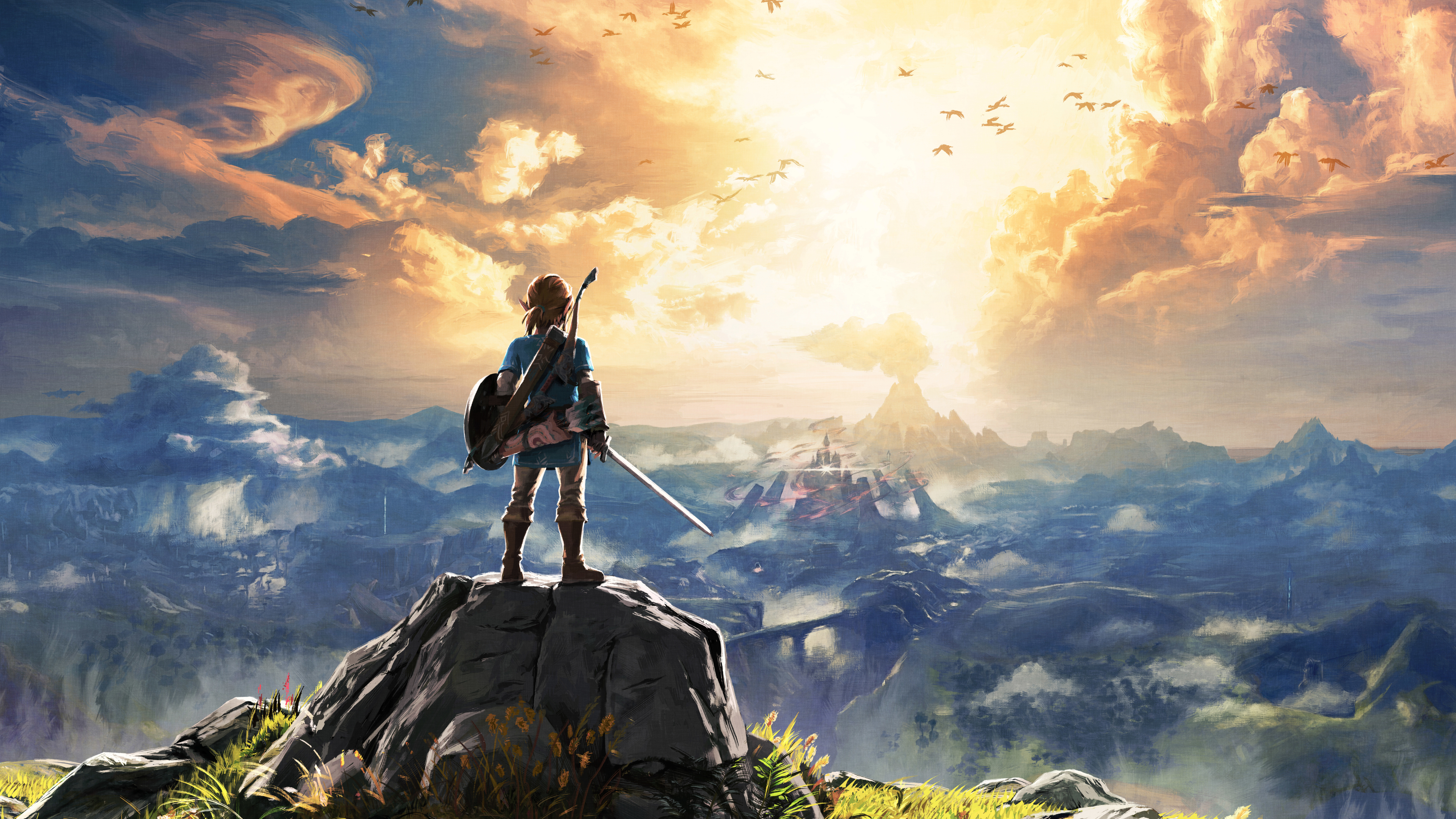
The Legend of Zelda: Breath of the Wild
LumiScore
Wachstum
51/100
Wachstumswert
- Problemlösung
- Räumliches Denken
- Strategisches Denken
Risiko
GERING
Nutzungsmuster
Minimaler Druck, Geld auszugeben oder übermäßig zu spielen.
Achtung
Eltern-Profi-Tipp
Eltern können die Bildschirmzeit regulieren, indem sie Kinder ermutigen, sich Ziele zu setzen, wie das Abschließen eines Heiligtums oder die Entdeckung eines neuen Gebiets, bevor sie eine Pause machen, und indem sie die kreativen Lösungen besprechen, die ihr Kind für spielinterne Probleme gefunden hat.
Top-Fähigkeiten, die entwickelt werden
Entwicklungsbereiche
Repräsentation?Wie vielfältig die Charaktere des Spiels in Bezug auf Geschlecht und Ethnizität sind. Höher = authentischere Darstellung. Nur zur Anzeige – beeinflusst die Zeit-Empfehlung nicht.
Bechdel-Test?Der Bechdel-Test prüft, ob ein Spiel mindestens zwei benannte weibliche Figuren hat, die miteinander über etwas anderes als einen Mann sprechen. Ein einfaches Maß für Repräsentation.— Besteht den Test nicht
Obwohl das Spiel zahlreiche benannte weibliche Charaktere wie Zelda und Impa aufweist, konzentrieren sich ihre Interaktionen hauptsächlich auf Links Quest oder den männlichen Antagonisten Calamity Ganon.
Was dein Kind entwickelt
The Legend of Zelda: Breath of the Wild zeichnet sich durch die Entwicklung kognitiver Fähigkeiten aus, einschließlich Problemlösung durch komplexe Welträtsel und strategischen Kampf. Spieler verbessern ihr Raumverständnis und kritisches Denken durch die Navigation in der riesigen Open-World-Umgebung und die kreative Nutzung verschiedener Spielmechaniken, um Herausforderungen zu bewältigen und Geheimnisse zu entdecken.
⚖️So wurde dieser Score diskutiert und geprüftTranskript anzeigen
Zwei KI-Modelle haben diese Bewertung in 2 Runden debattiert: ein Befürworter, der für die höchstmöglichen Punktzahlen argumentierte, und ein Kritiker, der für die niedrigsten argumentierte. Die endgültige Punktzahl ist der Durchschnitt ihrer Positionen in Runde 2.
=== Round 1 ===

ADVOCATE (arguing HIGH):
B1: problemSolving=5, spatialAwareness=5, strategicThinking=5, criticalThinking=5, memoryAttention=5, creativity=5, readingLanguage=4, mathSystems=2, learningTransfer=5, adaptiveChallenge=5
B2: teamwork=0, communication=0, empathy=2, emotionalRegulation=3, ethicalReasoning=1, positiveSocial=1
B3: handEyeCoord=5, fineMotor=4, reactionTime=5, physicalActivity=0
R1: variableRewards=1, streakMechanics=0, lossAversion=1, fomoEvents=0, stoppingBarriers=0, notifications=0, nearMiss=0, infinitePlay=1, escalatingCommitment=0, variableRewardFreq=1
R2: spendingCeiling=0, payToWin=0, currencyObfuscation=0, spendingPrompts=0, childTargeting=0, adPressure=0, subscriptionPressure=0, socialSpending=0
R3: socialObligation=0, competitiveToxicity=0, strangerRisk=0, socialComparison=0, identitySelfWorth=1, privacyRisk=0
Reasoning: The Legend of Zelda: Breath of the Wild earns exceptional cognitive benefit scores due to its vast open world and innovative chemistry engine, demanding high levels of problem-solving, strategic thinking, and creativity as players discover emergent solutions to challenges. Its dynamic action-adventure combat and exploration, requiring precise aiming, dodging, and environmental interaction, drive high scores in hand-eye coordination and reaction time. Moreover, the complete absence of microtransactions, loot boxes, and stranger chat ensures that all monetization and significant social risks are commendably low, making it a genuinely beneficial and safe experience for child development.

CRITIC (arguing LOW):
B1: problemSolving=5, spatialAwareness=5, strategicThinking=5, criticalThinking=5, memoryAttention=5, creativity=5, readingLanguage=3, mathSystems=1, learningTransfer=5, adaptiveChallenge=5
B2: teamwork=0, communication=0, empathy=1, emotionalRegulation=1, ethicalReasoning=1, positiveSocial=1
B3: handEyeCoord=4, fineMotor=3, reactionTime=4, physicalActivity=0
R1: variableRewards=2, streakMechanics=0, lossAversion=2, fomoEvents=0, stoppingBarriers=2, notifications=0, nearMiss=1, infinitePlay=2, escalatingCommitment=2, variableRewardFreq=2
R2: spendingCeiling=0, payToWin=0, currencyObfuscation=0, spendingPrompts=0, childTargeting=0, adPressure=0, subscriptionPressure=0, socialSpending=0
R3: socialObligation=0, competitiveToxicity=0, strangerRisk=0, socialComparison=0, identitySelfWorth=0, privacyRisk=0
Reasoning: My scoring reflects a strict interpretation of the rubric for a single-player game. Teamwork, communication, and positive social interaction are all rated 0 or 1, as the game lacks any interactive social mechanics. While the narrative may evoke empathy, it does not involve interactive social engagement, thus keeping B2 scores low. Furthermore, with no microtransactions, loot boxes, or stranger chat, both monetization (R2) and social risks (R3) are appropriately scored at 0. Lastly, several dopamine risk patterns are present due to the open-world design, such as variable rewards from exploration, loss aversion from weapon durability, and strong stopping barriers from the 'just one more thing' nature of the game, warranting a higher R1 score than typical assumptions.


=== Round 2 ===

ADVOCATE (arguing HIGH):
B1: problemSolving=5, spatialAwareness=5, strategicThinking=5, criticalThinking=5, memoryAttention=5, creativity=5, readingLanguage=5, mathSystems=3, learningTransfer=5, adaptiveChallenge=5
B2: teamwork=0, communication=0, empathy=1, emotionalRegulation=1, ethicalReasoning=1, positiveSocial=1
B3: handEyeCoord=5, fineMotor=4, reactionTime=5, physicalActivity=0
R1: variableRewards=2, streakMechanics=0, lossAversion=2, fomoEvents=0, stoppingBarriers=2, notifications=0, nearMiss=0, infinitePlay=2, escalatingCommitment=2, variableRewardFreq=2
R2: spendingCeiling=0, payToWin=0, currencyObfuscation=0, spendingPrompts=0, childTargeting=0, adPressure=0, subscriptionPressure=0, socialSpending=0
R3: socialObligation=0, competitiveToxicity=0, strangerRisk=0, socialComparison=0, identitySelfWorth=0, privacyRisk=0
Reasoning: My scoring emphasizes Breath of the Wild's exceptional cognitive and motor skill development, while aligning with rubric constraints for social and risk categories. The game's expansive open world and complex "chemistry engine" significantly boost reading, language, and mathematical reasoning beyond initial estimates, as players engage with deep lore and systemic interactions. Precise combat, climbing, and inventory management demand higher fine motor skills, hand-eye coordination, and reaction times. Consistent with the rubric's strict definition for single-player titles, social-emotional benefits are not inflated. Furthermore, low risk scores are upheld, with a minor adjustment to 'near miss' as it isn't a primary behavioral driver.

CRITIC (arguing LOW):
B1: problemSolving=4, spatialAwareness=4, strategicThinking=4, criticalThinking=4, memoryAttention=4, creativity=5, readingLanguage=4, mathSystems=2, learningTransfer=4, adaptiveChallenge=4
B2: teamwork=0, communication=0, empathy=0, emotionalRegulation=0, ethicalReasoning=0, positiveSocial=1
B3: handEyeCoord=4, fineMotor=3, reactionTime=3, physicalActivity=0
R1: variableRewards=1, streakMechanics=0, lossAversion=1, fomoEvents=0, stoppingBarriers=0, notifications=0, nearMiss=1, infinitePlay=1, escalatingCommitment=0, variableRewardFreq=1
R2: spendingCeiling=0, payToWin=0, currencyObfuscation=0, spendingPrompts=0, childTargeting=0, adPressure=0, subscriptionPressure=0, socialSpending=0
R3: socialObligation=0, competitiveToxicity=0, strangerRisk=0, socialComparison=0, identitySelfWorth=1, privacyRisk=0
Reasoning: While acknowledging the robust cognitive demands of Breath of the Wild, the advocate's B1 scores are inflated; a perfect 5 in multiple categories should be reserved for truly exceptional and focused development. The B2 social scores are particularly miscalibrated for a single-player experience; per the rubric, narrative elements do not substitute for active, interactive social mechanics, thus justifying a significant reduction. Furthermore, the game, despite its quality, incorporates common open-world design patterns that subtly leverage variable rewards, near-miss scenarios, and infinite play loops, warranting slightly higher R1 scores than suggested. This critical assessment ensures scores are based on active development and identifiable risk patterns, not mere potential or indirect effects.

=== Final (weighted 40% advocate / 60% critic, Round 2) ===
B1: problemSolving=4, spatialAwareness=4, strategicThinking=4, criticalThinking=4, memoryAttention=4, creativity=5, readingLanguage=4, mathSystems=2, learningTransfer=4, adaptiveChallenge=4
B2: teamwork=0, communication=0, empathy=0, emotionalRegulation=0, ethicalReasoning=0, positiveSocial=1
B3: handEyeCoord=4, fineMotor=3, reactionTime=4, physicalActivity=0
R1: variableRewards=1, streakMechanics=0, lossAversion=1, fomoEvents=0, stoppingBarriers=1, notifications=0, nearMiss=1, infinitePlay=1, escalatingCommitment=1, variableRewardFreq=1
R2: spendingCeiling=0, payToWin=0, currencyObfuscation=0, spendingPrompts=0, childTargeting=0, adPressure=0, subscriptionPressure=0, socialSpending=0
R3: socialObligation=0, competitiveToxicity=0, strangerRisk=0, socialComparison=0, identitySelfWorth=1, privacyRisk=0
Curascore: 65  BDS: 0.510  RIS: 0.119
Rechtliche Vorgaben
Tippe auf ein Symbol für Details. Grau = noch nicht bewertet.
Über dieses Spiel
The Legend of Zelda: Breath of the Wild is an adventure game developed by Nintendo. It is the nineteenth installment in the series.