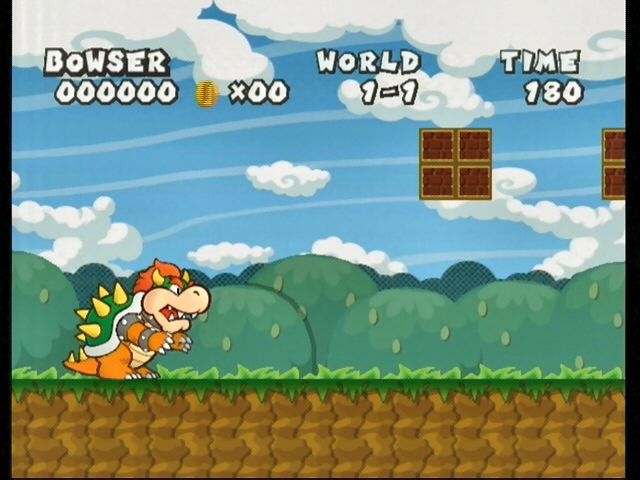
Paper Mario: The Thousand-Year Door
LumiScore?Our 0–100 score for how developmentally beneficial and low-risk this game is for children. Higher is better.
Wachstum
57/100
Wachstumswert
- Lesen & Sprache
- Problemlösung
- Strategisches Denken
Risiko
GERING
Nutzungsmuster
Minimaler Druck, Geld auszugeben oder übermäßig zu spielen.
Achtung
Eltern-Profi-Tipp
When your child sits down to play, agree on a chapter checkpoint or save block as a stopping point before they start. The game's frequent save prompts make this easy — you can simply say 'save at the next inn and we'll pick it up tomorrow.'
Top-Fähigkeiten, die entwickelt werden
Entwicklungsbereiche
Repräsentation?Wie vielfältig die Charaktere des Spiels in Bezug auf Geschlecht und Ethnizität sind. Höher = authentischere Darstellung. Nur zur Anzeige – beeinflusst die Zeit-Empfehlung nicht.
Bechdel-Test?Der Bechdel-Test prüft, ob ein Spiel mindestens zwei benannte weibliche Figuren hat, die miteinander über etwas anderes als einen Mann sprechen. Ein einfaches Maß für Repräsentation.— Besteht den Test nicht
While Princess Peach is a major character with her own playable chapters, her storyline primarily revolves around being rescued by Mario, and named female characters rarely interact with each other about topics other than Mario.
Eltern-Profi-Tipp
Try asking your child to explain their battle strategy to you — 'Why did you use that move?' or 'What's that enemy's weakness?' This turns the game's strategic layer into an out-loud reasoning exercise and gives you a natural window into what they're learning.
Was dein Kind entwickelt
Paper Mario: The Thousand-Year Door is a richly rewarding RPG that delivers strong cognitive benefits for children. The game's dense dialogue and story-driven structure make reading comprehension a core skill, while its turn-based battle system demands strategic planning, critical thinking, and resource management. Players must analyze enemy weaknesses, manage timing-based action commands (building reaction time and hand-eye coordination), and solve environmental puzzles throughout each chapter. The layered narrative — told across three simultaneous storylines — exercises memory, attention, and the ability to track complex cause-and-effect relationships. The game's charm, humor, and genuine character writing also foster emotional engagement and a mild sense of empathy for its diverse cast of NPCs.
Rechtliche Vorgaben
Tippe auf ein Symbol für Details. Grau = noch nicht bewertet.
Über dieses Spiel
Paper Mario: The Thousand-Year Door is a role-playing video game developed by Intelligent Systems and published by Nintendo for the GameCube. The Thousand-Year Door is the second Paper Mario game.